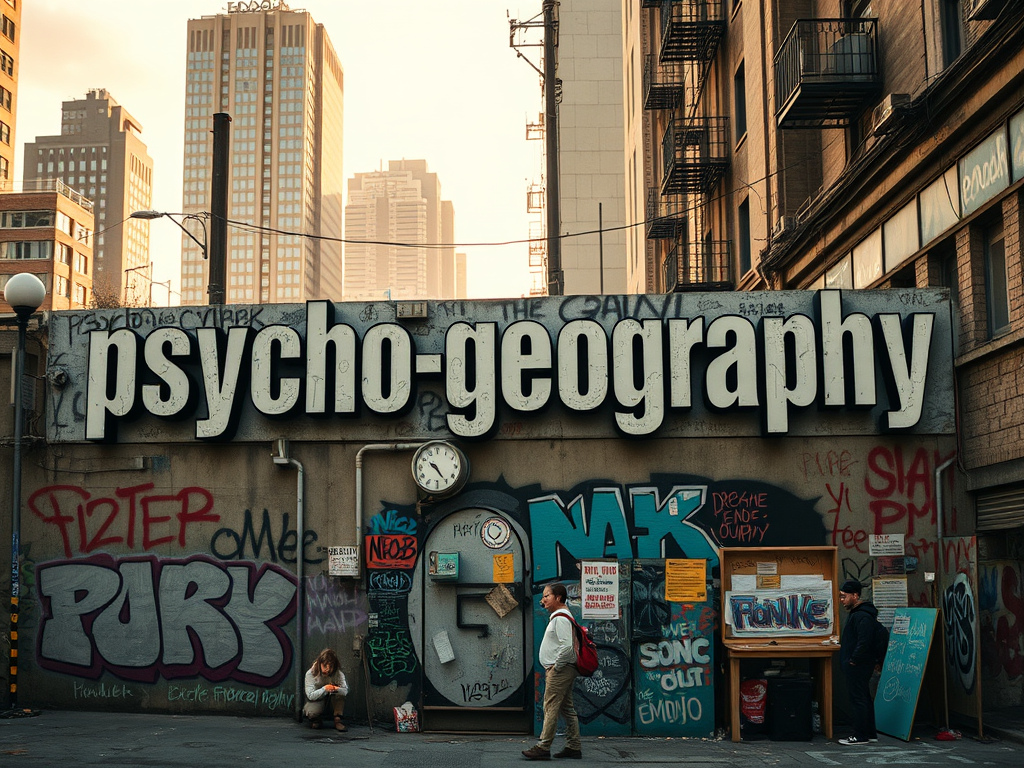
Posts, this year focus upon arts and crafts and today I look out towards the art of others. I visited the thought-provoking Tout Quarry Sculpture Park & Nature Reserve (subsequently referred to here as the Tout Quarry) on Sunday 22nd March 2026. It was a very enjoyable adventure. These are my reflections and some of the photographs.
Didn’t I have a lovely time the day I went to Portland
I had never visited the tied Dorset Island of Portland before. I had passed close by about thirty years ago whilst walking the Dorset Coastal Path. I didn’t have the legs on that occasion to manage the diversion. Recently, I found myself staying at a Weymouth Holiday Park for a week with Portland looming large on my horizon. The BBC’s Mark Steel’s in Town episode on Portland offered an enticing introduction. After some further internet research, I was strongly attracted to visiting the Tout Quarry. I do find old industrial heritage archaeology evocative and the idea of repurposing a disused quarry as a sculpture park appealed.
On a rural Dorset community bus later in the week, our bus driver told passengers the tale of taking a tourist coach party onto the Isle of Portland. He informed these tourists that they would need to show their passports. He was joking, but somehow there is something unusual about travelling on to this tied island.
I awoke early on the Sunday morning to wonderful March sunlight and clear and very blue skies. I had decided to visit very early, so that I could do some photography, benefiting from the relative peace and early morning light. The regular No.1 bus took me across the water and onto the island. It was then a very steep ascent, I could have walked from where I was staying, but I wanted to conserve energy for seeking out sculptures. As the bus climbed and climbed, we passed old terraced homes which must have originated in the far earlier quarrying era. My homework suggested that the bus stop I needed was Portland Heights. There was a clue in the title; but I had not appreciated how high we were going. My past experience of quarries had been that they were invariably at sea level. By geological necessity this one was located at a high point on the island. After leaving the bus, the views back towards Weymouth and Chesil Beach were amazing.
Looking towards Chesil Beach and Weymouth
We are the Memory Stones, we are the Memory Stones
In Brighton, I once heard the ghostly refrain from an outdoor broadcast of the film Quadrophenia – we are the mods, we are the mods! In a similar way, the Memory Stones met me and greeted me as I left the No.1 bus with a friendly, loud and proud echo of the past. Art simultaneously fondly remembered the quarrying heritage, celebrated arriving at Tout Quarry and in an ephemeral and uncertain world suggested the importance of remaining and remembering.
“Fallen Fossil” by Stephen Marsden“Hearth” by Timothy Shutter
Tout Quarry is close by the Memory Stones, yet its magic is being part of the landscape, rather than being apart from the landscape. So, although I knew I was close, it took some time to stumble across my first sculpture.
An Easter egg hunt for all ages
Tout Quarry is free to visit. This takes me back to the free music festivals of thirty years ago, before music festivals became commercial enterprises. This is more than saving money, it is about engaging with something in a non-transactional way. For myself, Tout Quarry felt like going back to the 1960s and 1970s. The site felt cared for, rather than curated, landscape reimagined, rather than a Disneyesque visitor attraction. I could have spent eight minutes or eight hours there; no stewards, no tickets, just a landscape with added sculptures and ghosts of memories.
The creative and inspired idea not to include signage of each sculpture frustrated me in a strangely positive way. The only sign I saw was a sensible caution about health and safety. Other than that, you had to use your eyes and your legs, you had to engage with the art, it was not purely passive consumption of art. That said, don’t underestimate the joy of discovery. At times my old eyes missed a sculpture right in front of me, sometimes a shift in position and perspective resulted in a revelation. There was plenty of leg work, early on this Sunday morning the only other visitors were casually walking their dogs. I am sure I could have asked them for directions, but that wouldn’t have been as much fun.
Even in March the terrain was very dry and dusty with the overhead sun shining brightly up on this island of stone. As I navigated through passages between rocks I was reminded of the spaghetti westerns from the sixties. I spent a few hours happily photographing sculptures. The sunshine, sculptures and the abandoned landscape made me feel quite trippy as I searched out art in nature.
Sculpture as art of the open air
In doing the preparation for this post, I discovered this Henry Moore quotation.
Sculpture is an art of the open air. Daylight, sunlight, is necessary to it, and for me, its best setting and complement is nature. (Henry Moore)
I took many photographs, mainly in dynamic monochrome, this worked well with the morning sunlight. The majority of sculptures alluded me. The one’s that I did find, which revealed themselves to me were more than enough. I do recommend visiting the learningstone.org site which offers a downloadable map highlighting and labelling sixty of these “hidden” sculptures. Even using this map after the event, it proved difficult to label many of my photographs. In what follows, I have included some photographs which I have been able to identify, as well as, a few wildcards.
“Wreck” by Rosie Leventon“Still Falling” by Antony Gormley“Representation of a Baroque Garden” by Shelagh Wakely“Philosopher’s Stone” by Robert Harding
Stoned Love
In conclusion, that wonderful Supremes song Stoned Love comes to mind.
Yes, literally Tout Quarry is about a love of stone. Quarrying was dangerous with many lives lost, but there must have been an intimacy with the Portland stone being quarried. There is continuity with the love of stone, creatively and imaginatively continued through the work of the sculptors. In viewing the sculptures, the love of stone is evident. However, there is a strong counter cultural element here. Whilst, Portland stone was quarried to fulfil orders, the sculptures I viewed appeared to freely express what the sculptors chose to express. I found myself in the realms of another state of consciousness. I am not sure you can get stoned on stone, but there is something magical about this place. Stoned love “… will light up, it will surely light up darkened worlds if you just believe.” (The Supremes, 1970). The art and the landscape certainly lightened up my world on my visit and for that I am grateful.
The term “Mary tree” refers to an individual sculpture made out of old contorted woody rosemary herb plant stems. I see beauty and meaning in what others might regard as ugly. I recycle and craft stems which most gardeners would put onto their compost heaps. A process very compatible with the cycle of life ethos of woodlanddecay.com.
The first Mary tree was created as a sculpture about five years ago, but at that time it was never fully realised. At the beginning of 2026, I knew that I needed to shift from reading, writing and thinking towards feeling, sensing and intuiting. Whilst, here I am writing again, the creative shift I am writing about has been meaningful and enjoyable. The theme for this site last year was psychogeography. This year I am consciously engaging with arts and crafts, in many ways though an unconscious undercurrent of psychogeography accompanies my crafting.
I enjoy reflecting upon what a rosemary stem say’s to me. The following four labels here, frame the results of my reflections; The Mary Tree, The Ruminator, Time’s Erosion and TheLightning Tree. In one way, the contorted beauty of these stems does not require the imposition of labels. In another way, labelling encourages deeper active engagement with each sculpture and for myself at least this has proved meaningful.
The Mary Tree
The Mary Tree
The original Mary tree is known simply as The Mary Tree. About five years ago I was struck by the beauty of this rosemary stem. In particular the stem, up close looked like the trunk of a hundred-year-old tree. The roots inverted here look like the branches of a tree.
The Mary Tree (Macro)
These roots once searched underground for water and now we glimpse their hidden beauty. Staging these sculptures became a necessity and I began to appreciate the need for a base. In nature these plants had been grounded and in art they needed to be grounded. In this case, I used a hand-crafted piece of Welsh slate I found as the base. I created a simple diorama with some small rocks and grass growing around the base of The Mary Tree, which is struggling to grow out of a gap in the slate.
The Ruminator
The Ruminator
A person sits very, very alone on a lump of flint. The dark blackness of the flint shines through in places, echoing a dark depression. This is not a happy place. The person is cast adrift on this rock, the healing balm of human interaction missing from their repetitive deliberations. The thoughts of The Ruminator are contorted and twisted, hopefully evident in this contorted sculpture. Yearning arms out stretched, yet legs tightly and paradoxically crossed – simultaneously suggesting hold me/go away! The faces of some people reflect the worries of a lifetime in frown lines and wrinkles. Similarly, The Ruminator has become contorted and caught up in the dark thoughts of a lifetime.
Time’s Erosion
Time’s Erosion
Time’s Erosion is by far my favourite sculpture.
In parallel to working with this Mary tree I was reading a novel. There was a reference to one of the older characters displaying time’s erosion. I thought what a wonderful phrase to capture what we all experience in later life. I then understood what this sculpture was talking to me about – the heavy, yet inevitable toll of the passage of time. I began to see the sculpture in a similar way to an autopsy image of an old human heart. A once beating heart removed from the centre of the chest of an old body. In a similar way to a surgeon, I removed this central part of the rosemary plant, severely severing stems as part of this process. The central part of this rosemary plant fulfilled a similar role to the heart, pumping the nutrients of life around the plant.
Time’s Erosion sits on a piece of old rock. I was pleasantly surprised when I added the sealant. The sealant brought out colours in the rock and the Mary tree that were very compatible, yet this was a pleasing surprise, rather than a conscious choice. When I gaze upon Time’s Erosion, I see something different every time, a beautiful carrier of a remembered past. This is not a sad sculpture, more a healthy acknowledgement of inevitability.
The Lightning Tree
The Lightning Tree
Once a suitable woody rosemary plant has been selected, I tend to hang it in the apple tree. The elements of wind, rain and sun clear away any debris and help to dry out the plant. However, there is still work to be done with the “raw” woody material. There is an outer bark-like skin which has to be removed with a knife and tweezers. Whilst, this could be left on, it would be prone to mould and also experience has taught me that this outer skin often becomes lose when applying the sealant.
A pleasant consequence of this stripping down is becoming intimate with your Mary Tree. You feel it, you see it from different angles and you sense it in different ways. Initially, I thought of this sculpture as an alien lifeform. Viewed horizontally I imagined it crawling over the surface of our earth looking for signs of life. However, with time it increasingly suggested to me a tree struck by lightning. Desolate yet proud trees, you sometimes see standing alone in fields. There was a rationale to remove the roots to make it look more realistic. There was also a rationale to leave the roots and celebrate their rarely seen art and twisted charm. I decided to set this sculpture on a rough old piece of wood which had already been treated with green preservative. I added the round stone to rest the sculpture upon and make some sense out of the inclusion of the roots.
The creative realisation of a Mary tree is sometimes aided through looking at related images. On googling “The Lightning Tree” I had an unexpected epiphany. I am always on the lookout for folklore/mythology relevant to what I sculpt. I noted the strong associations between rosemary and memory/remembering. The top Google hit was a surprise – The Settlers singing The Lightning Tree, used as the theme for the children’s television series Follyfoot. This took me back to my childhood and Sunday teatimes. We would have freshly baked cake/bread, which my Mum, Dad, sister and myself would eat watching family Sunday teatime television. Follyfoot and Black Beauty were family favourites on those Sundays, along with Catweazle and Stig of the Dump. Happy memories, today, the Settlers singing The Lightning Tree also evokes the light and darkness depicted in the film The Wicker Man. The wonderful lyrics urge us to grow, grow the lightning tree, it’s never to late for you and me and I am completely captivated in the singer’s spell.
Rosemary practicalities and possibilities
Understandably, in a world a wash with internet guidance and now supplemented by artificial intelligence, advice on how to grow woody rosemary is lacking. I do like the heretical nature of the task at hand. Initially to grow rosemary so that it becomes woody. The task is frustrating, but nature’s message to me, is that this process requires patience. Typically, it takes six or seven years for a rosemary plant to become woody. Even then properly cultivated rosemary does not become woody. There isn’t the opportunity to buy woody rosemary at your local garden centre. I have cultivated herbs for decades and it was a happy accident that I began to notice the beauty emerging from forgotten rosemary plants in old pots. Whilst rosemary plants in the ground can and do go woody, such stems are likely to be far larger than the stems featured here. Rosemary has to be forgotten, before it can be reimagined.
Dreams come true if you want them to, if you want them to, then it’s up to you. (The Lightning Tree – The Settlers)
As our climate changes, rosemary in pots exemplifies the struggle these plants have with the drought conditions on our South Coast. The positive news is that rosemary is easy to propagate. I have plants in preparation which are about four years old. They were propagated by putting cuttings in water for a fortnight until roots had formed and then putting these small plants into potting compost. I am using some soft wire to pull stems together on the four-year-old plants, but this is experimental. The key is patiently forgetting rosemary, rather than cultivation. I do have some more old rosemary stems, which I am waiting to speak to me. I am certain, I will create another Mary tree, but I do not know when and what form will be suggested to me.
The subtitle mischievously implies a knowledgeable psychogeographer reflecting on his work. This is not the case; all I know is that I know nothing. I had been peripherally aware of psychogeography for about a decade; the concept appeared pretentious and excessively bloated with philosophical posturing. Everything changed in that weird liminal space between Christmas and New Year 2024. Disparate interests that psychogeography embraces magically coalesced. I do not understand the alchemy that transformed my scepticism into fascination. Now, psychogeography frames my sense-making and inspires my writing.
There is a high literary wall surrounding psychogeography. Pity the limitations of those who haven’t read Debord, Benjamin, et al.
Thankfully, benevolent intellectuals kindly espouse radical change on behalf of the less knowledgeable. It all smells a bit like the intellectualism characterising contemporary universities. My list of references was always bigger and more critical than yours. Once upon a time, I would have excitedly applied for my library card only to lose myself in the contested terrain of psychogeography literature. Today, pragmatically, I have neither the time (lifespan) nor the intellectual insecurity to embark on a psychogeography literature field trip.
The single amulet I chose to take on my journey was Merlin Coverley’s Psychogeography. There were other potential books. When I read his book, the psychogeography magic felt right. I have spent too long searching for life in literature; today, belatedly, I choose life. Coverley’s informative overview features in the inspirations below, but first, I must clarify my favoured meaning of psychogeography.
The study of the specific effects of the geographical environment, consciously and unconsciously or not, on the emotions and behaviour of individuals. (Coverley, 2018:120).
This is taken from an Internationale Situationniste glossary. Now, there is a name drop for you. This definition captures the central interface between geography and psychology, not limited to urban cityscapes. The reference to emotions speaks to the importance of lived experience and reflexivity. Greater acknowledgement of history informing physical and human geography would be good, but I take that as embedded in this favoured definition. Also, an openness to occult strangeness is integral to psychogeography.
I could happily drift through the next few thousand words discussing and contrasting definitions. Today, however, impatient and purposeful, rather than a discipline, psychogeography inspires.
The pleasing vagueness of psychogeography
Coverley (2018) warns about the pleasing vagueness of psychogeography and the peril that we are all psychogeographers now. He critically concludes that perhaps too much has been written about psychogeography. Is this a call to subvert an orthodoxy that scholarly gatekeepers pejoratively maintain?
In academia, I encountered a definitional critique about a word that means everything to everybody but suddenly means nothing to nobody. Yes, if the goal is to advance the objective study of psychogeography, then definitional critiques are an academic best practice. However, life is not purely an academic exercise.
The deep-rooted willingness inherent within psychogeography to embrace subjective vagueness is an inspiration, not a shortcoming. Coverley (2018:27) cites Debord’s frustration: “the subjective realm of human emotion remained stubbornly resistant to the objective mechanisms he chose to employ”. Similarly, explaining Blake’s contribution, he notes “… the precedence given to the subjective and the anti-rational over more systematic modes of thought” (2018:43). I appreciate that systematic, rational and objective psychogeographic studies serve performative academic agendas. However, occult strangeness isn’t objective, and it isn’t rational. I am inspired to go on very different psychogeography field trips.
As a child, I wanted to look at nature; today, I want to do psychogeography
As a six-year-old, adults asked me what job I wanted to do when I grew up. The expectation was an exciting and purposeful job such as a racing car driver, fireman or astronaut. My Mum told me my verbatim answer was always “I want to look at nature”. Frustrated adults then tried to turn this foggy and passive notion into remunerative labour, missing the subtlety of my muse. I did plenty of remunerative labour between then and now, but my childhood ambition was sound. Today, I garden and ramble, but most importantly, I look at nature. Psychogeography inspires us to look at nature beyond the exclusively visual.
Psychogeography and imaginary voyages into isolation
Coverley (2018) discusses Robinson Crusoe, highlighting the twin motifs of Defoe’s novel: an imaginary voyage and isolation. As part of a mass thought experiment in the late sixties, youngsters were exposed to multiple repeats of a black-and-white adaptation of Robinson Crusoe throughout their summer holidays. Crude dubbing into English only added to the otherworldliness of this grainy European production. The accompanying orchestral music was wonderfully drenched in frustration and melancholy. Robinson roamed about a little island with very little happening. As children, we joined him in our imaginations, and his isolation was our isolation, over and over again. Psychogeography frames understanding imaginary voyages into isolation.
Psychogeography and the seduction of existential novels
A little older, now a lonely teenager, existential novels offered life meaning. Hesse, Dostoyevsky, Camus and Kerouac spoke loudly from different geographies and times. I anticipated existential literature featuring more prominently in Coverley’s (2018) overview, although, in mitigation, it was an introduction.
Sal Paradise and his companions aimlessly drift across America in On the Road, hitching rides on random goods trains. In this novel and others, Kerouac catalogued the changing landscapes and emotions that Sal encountered. The magical hallucinatory experiences achieved through drink and drugs, which accompanied these journeys, finally swallowed up Kerouac’s life. Another way psychogeography frames the understanding of increasingly painful imaginary voyages into isolation.
Psychogeography, subversion and suburbia
Today, I happily live in a small suburb (Saltdean) a few miles outside Brighton. Unlike the city, you can still walk along the pavements, and people are neither rushing nor scrolling while walking. Coverley’s (2018:148) citation of Ballard had particular meaning: “In the suburbs you find uncentred lives … So that people have more freedom to explore their own imaginations, their own obsessions.”
In front of my home, the sea and behind my home, the South Downs, I reside in the space in between. I have an Easter Island (Moai) figure in my garden. One day, Moai and I decided to go on a subversive little trip together. Moai posed whilst looking out over the English Channel. Far removed and out of context from Easter Island (see here). In later life, I randomly enjoy roaming the countryside on my doorstep. Saltdean hinterland now speaks to me, and I have the time and inclination to listen.
Known pasts, rather than unknown futures
For three decades, I studied organizational change academic theories and practices. The focus was on managing from a known present to an unknown future. We rarely acknowledge that an unknown metaphysical future was exciting and problematic for theory and practice. Consequently, theory and practice worked with an implicit assumption about a known future. Psychogeography appears to reverse the known future logic.
Psychogeography looks towards physical and emotional landscapes and magic to engage with competing explanations of known geographies. Art and inspiration are embedded in different ways of viewing known landscapes. Today, I find competing and contested accounts of the past more meaningful than assertive future prophesies.
I like the musty smell of psychogeography in the morning
A landscape without history is merely a view.
Coverley (2018) invokes Baudelaire as a man not so much of his time as a man out of time. My interest in history noticeably increased in my early sixties. The sad epiphany was that I have far more history than future to reflect upon. History has more meaning than the future offers reassurance.
The season for my psychogeography studies is autumn. I stroll purposefully in the woods with the decaying leaf mould beneath my feet, holding the hand of someone I never quite got together with. There is a slight smell of dampness in my home before the central heating is turned on for winter. Increasingly, I crave the spring seasonal resuscitation, hoping it will not be the last one.
We all eventually return to nature, woodlanddecay.com and psychogeography
I began writing woodlanddecay.com posts back in 2011 with neither plans nor ambitions. Best practice prescribed having a unifying theme. However, I was more interested in writing whatever I wanted, whenever I wanted. Even the woodlanddecay title wasn’t that sexy. However, it became more applicable as my decay became more imminent.
An interesting academic exercise is to ask, does the theory fit the practice, or does the practice fit the theory? In my case, it is both. Psychogeography concepts, theories and practices could be applied to some of the posts on this site, whereas other posts have nothing to do with psychogeography. As I return to looking at nature, I detect an unintended emotional undercurrent in my writing. This is most explicit in posts about music and adventuring in nature. A Place to Rest on Iford Hill, is illustrative.
The post features a short ongoing account of a memorial bench high on the South Downs. Over three decades, this bench has slowly decayed. Nature reclaims the bench as the memories of the deceased fade. In parallel with the decay of the bench, I appreciate that I am in the process of my final return to nature. I wrote about this bench before I had read or heard about Martin Coverley’s (2018) book. In retrospect, I believe my practice fits his theory. Reading his book now inspires me to go beyond describing the natural world and engage with such landscapes more deeply. Today, psychogeography offers a theme for my rambling posts on this site.
Psychogeography as an antidote to aphantasia
Approximately 2% of the population does not have visual imagination. Thankfully, we have a label to unify and reassure us: “aphantasia”. As a small child, I was at the other end of this spectrum, having imaginary friends for company. In my teens, I could conjure the fantasies teenagers conjure up, but by my late twenties/early thirties, my visual imagination began to depart. A treasured long-time companion (visual imagination) has gone forever.
More positively, my imagination is strong, there is just nothing showing on the internal movie screen. For example, I imagine changes to my garden conceptually rather than visually as I play with my back garden topography. I only see the garden when I have invested the physical time and labour, working from a conceptual mental map rather than a visually descriptive image. Psychogeography nudges us out of the realms of landscapes as literal paintings and into the realms of a more multi-sensory experience.
Psychogeography is ok with magical thinking
On leaving academia in 2019, I enthusiastically reoriented my non-fiction reading focus towards books on esoteric, occult and mystical practices. In hindsight, I gave two fingers to the more rational and theoretical literature, which defined most of my working life. More positively and proactively, I read the literature I’d always wanted to read.
The Book of English Magic, Magic: An Occult Primer and The Master and his Emissary were particularly enjoyable in different ways. The commonality was their respect for magical thinking, the unconscious and the importance of intent. It is symptomatic of scientific/intellectual arrogance today that anything strange or unusual is disparaged as “magical thinking”. We used to be fascinated by and respectful of the strange and unusual, particularly in the natural world. Psychogeography consciously embraces and engages with magical thinking today and celebrates the magical thinking of yesterday.
Psychogeography and journeying to other worlds
Coverley’s (2018:93) discussion of Breton’s concept of deambulation intrigued me: “… a medium through which to enter into contact with the unconscious part of the territory.” Accessing this unconscious territory means everything to me. However, it is neither as well signposted nor as unambiguous as conscious territory. What I liked most about Martin Coverley’s book was his encouragement to visit the unconscious part of the territory. I had begun to do this intuitively, but his vivid illustrations of how respected authors visited and mapped unconscious territories were informative.
As part of my mystical literature review (see previous section), I delved deeper into shamanism in different parts of the world. The Hawaiian Huna practices made the most sense in my quest. I have been fascinated by shamanism for decades. Shamans are my archetypal psychogeographers in their ability to combine nature, emotions and magic. This is most impressive given that they haven’t read Debord, Benjamin et al.
I was fortunate to attend a series of Saturday Schools facilitated by two wonderful local shamanic practitioners, Susan Greenwood and Brian Bates. As students, we sat in a circle, and Susan asked us to imagine a place in nature. I imagined the undercliff walk on the seafront near Brighton at the bottom of the chalk cliffs. As we began, the sea was calm, a beautiful warm day in summer. Susan changed the beat of her shamanic drumming, and the water became blood-red and turbulent. The landscape in front of me had changed dramatically and emotionally.
On another occasion, after an intense and informative Saturday School, I was lying on my bed, tired but awake. I became a salmon swimming through the forest. I became the landscape, exploring this territory from a completely different perspective. If I could repeat a single journey from my lifetime, it would be that salmon’s eye perspective of the forest. Sadly, the aphantasia shutters came down (see earlier entry), and such visual journeys are now out of reach. Psychogeography feels like my best chance of journeying into other unconscious worlds.
This year, I will be mostly tripping through landscapes, emotions and imaginations
Books teach us to imagine other worlds, empathise with characters’ struggles and process complex emotions. Source: Stefano Hatfield, i Newspaper 30/12/24 (Page 24)
Hatfield wasn’t focused on psychogeography in this article, but by association, writing involves imagining other worlds, empathising with characters’ struggles and processing complex emotions. In 2025, I hope to write further woodlanddecay.com posts. The following is a fluid and flexible agenda; after all, the only authority is myself, but provisionally:
Today, I enjoy imagining, empathising with and processing the strange trip that is everyday life. I make no claims to be a flaneur, to know any of the poems of Baudelaire or to have ever been to Paris. However, something within psychogeography excites and gives purpose to my tripping. I was surprised by how much I enjoyed reading Psychogeography by Martin Coverley (2018). His concise book located a portal into another world. The philosophy bouncers will never let me into Strollers – the psychogeography night club – but at least now I know where they meet and the way in.
Connections
I have embedded book links into the text. On this post, comments are open, alternatively, I respond promptly to constructive feedback via the Contact page.
Psychogeography What a long strange trip it has been