Tag: Organizational Change

  • Organizational Change – YouTube Playlist

    Organizational Change – YouTube Playlist

    Introduction

    (updated 05/12/25)

    This organizational change YouTube lockdown playlist has featured my highly opinionated reviews of organizational change literature. If nothing else, I have enjoyed the distraction of this creative process. Critical thinking primarily informs my review choices rather than my reviews. I concentrate on the literature that I appreciate and I celebrate that literature, rather than objectively reviewing it. There are some critical reviews, but the ‘dodgy’ organizational change literature doesn’t really merit the time and energy it takes to create a video.

    This post lists all of the videos that I produced. I am not going to embed all videos into this post. I have embedded the final two videos and included a short commentary. I enjoyed the creativity of making these videos; filming, editing and uploading proved to be a fascinating learning curve.

    Organizational Change YouTube Playlist

    Videos Listing

    1. Introduction to the OCRD playlist.
    2. The Dynamics of Planned Change. (Lippitt, Watson and Westley, 1958).
    3. Politics of change: The discourses that inform organizational change and their capacity to silence. (McMillan, 2016)
    4. Upbeat leadership: A recipe for – or against – “successful” leadership theory. (Alvesson, 2020)
    5. Chapter (8) ‘Leading Change’ in A handbook for leaders in higher education: Transforming teaching and learning. (Marshall, 2016)
    6. Organizational Silence in the NHS: ‘Hear no, See no, Speak no’. (Pope, 2019)
    7. Philosophies of Organizational Change. (Smith and Graetz, 2011)
    8. Success or failure? Making sense of outcomes in a public sector change project. (Hagebakken, Olsen and Solstad)
    9. Leaders and managers: Are they different. (Zaleznik, 1977)
    10. The Dark Side of Transformational Leadership: A Critical Perspective (Tourish, 2013)

    My most critical video. Many academics still cite this 1977 magazine article when they are attempting to encourage a differentiation between managers and leaders. If you watch the video, you will see why I am suspicious about this encouragement.

    Celebrating one of my favourite contributions to the leading organizational change and transformation debate.

    Organizational Change: YouTube Playlist

  • Exploring Change: My Podcast Journey

    Exploring Change: My Podcast Journey

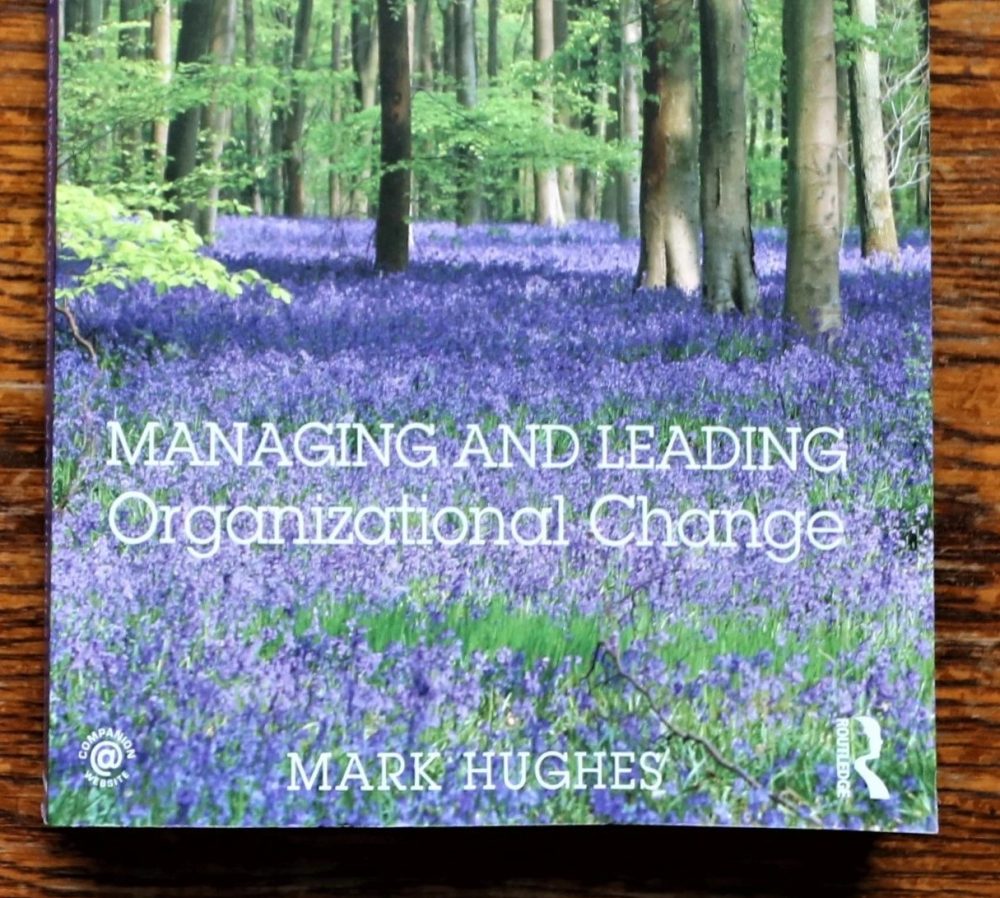
    Book Cover - Managing and Leading Organizational Change (Hughes, 2019)

    These are the links to my podcast journey. I can guarantee the links still work, but I know these podcasts happened.

    In June 2020, I enjoyed talking with Jane Stewart and James Carrier as part of their now closed World of Work podcast series (Episode 83).

    In May 2022, I enjoyed being interviewed by Susanne Evans for her ChangeStories podcast.

    In December 2022, I enjoyed becoming a podcast interviewer, interviewing Susanne about her PhD.

    In July 2025, I enjoyed doing a webinar with Steve Hearsum, on the theme of Mythunderstanding Organizational Change.

    TBC – Possibly…

  • Managing and Leading Organizational Change-Book Review

    Managing and Leading Organizational Change-Book Review

    I was delighted to read this appreciative review of my final textbook Managing and Leading Organizational Change and grateful to Dr David Wilkinson for taking the time to write it.

    In academic circles, despite the money students and university libraries invest in such texts, textbook authoring is surprisingly unfashionable. David fairly explains why such academic scepticism about textbooks exists, thankfully for myself he doesn’t bracket me in this category.

    What I most appreciated in his review was that he appeared to understand the deeply embedded intent in my writing. In an ideal world organizational change theories and practices would be informed by the latest research in the leading academic journals. The danger is that we assume that this ideal is the reality, I don’t believe it is.

    After decades of reading organizational change journal papers, I struggle with some of the content. In all honesty, some of it is too intellectual for me to comprehend – my bad! Other papers about organizational change leave me pondering if an organizational change is the primary interest of the author or an instrumental means to an end – publication in a prestigious journal.  My workshops and writing have largely been informed by reading journal papers, but sometimes the most useful contributions to organizational change theory and practice are not in the most prestigious journals, but instead they are in the less prestigious journals and books.

    As a textbook author I see my role as a scholar, rather than a researcher. A researcher gathers new knowledge, a scholar critically interprets existing knowledge.  I explain this further in the preface of the new textbook, this preface should be freely available on the preview pages of the book on online sites.

    As a scholar I see my role as acting as an intermediary between what is being written and published by trustworthy academics and student and practitioner audiences. I want to guide readers towards the more reliable and valid literature.  Also, I want to guide readers away from less reliable and valid literature. I remain troubled by the simplistic associations that the most prestigious Business Schools always offer the most reliable and valid organizational change insights.  My academic life has involved questioning organizational change knowledge. As I move into a later phase of my academic life, I now have more questions than answers, but I wouldn’t have it any other way.  

    Myth-understanding Organizational Change

    The first chapter of the textbook compiles many of the organizational change myths I encountered during my career. In hindsight, the chapter was far too philosophical for an introductory chapter of a textbook. However, I do provocatively believe that engaging with and understanding organizational change myths is as important as busting these myths.

    Follow the link for a final draft of the first chapter – Myth-understanding organizational change.