Category: Psychogeography

  • Pay no Poll Tax, London, March 31st, 1990

    Pay no Poll Tax, London, March 31st, 1990

    Introduction

    The Pay No Poll Tax took place against the financial hardships of the 1970s and 1980s. The ideological agenda of the Conservative government fuelled many strikes and demonstrations. However, the Poll Tax demonstration stands out in terms of scale and level of conflict. Positively, the demonstrations accelerated the political demise of the Prime Minister, Margaret Thatcher.

    On March 31st 1990, I attended the national demonstration in central London against implementing the Poll Tax.  The media almost unilaterally focussed on isolated though violent disorder. They misrepresented what I perceived as a huge and largely peaceful demonstration of collective dissent. As memories fade, competing histories inform and misinform us about what happened. Today, the only certainty in a mediated world is that I was there.

    Firstly, as scene setting, I offer a little background about the Poll Tax and why it provoked such strong reactions. Secondly, I introduce my interest in journalling. Thirdly, I share my verbatim journal entries after attending the demonstration. Fourthly, I conclude with reflections on a significant moment in political and social history.

    I have included scans of photographs taken at the demonstration. Digital photography, taken for granted today, was not available in 1990.   Unfortunately, I ran out of film when we reached Northumberland Avenue.  That was frustrating at the time, and it still is frustrating.

    About the Poll Tax

    The political intent behind the Poll Tax (aka the Community Charge) was to shift from rates based on the value of a property to a flat rate levied per person.  For example, a millionaire living in a mansion would pay the flat rate once, whereas six people living in a small terraced house would each pay that flat rate. For wealthy Conservative voters, the appeal was that it shifted the tax burden in communities onto the poorest. The Conservatives campaigned on this agenda, which gave them a democratic mandate to implement the Poll Tax.  Thankfully, we lived in a country where the right to protest and convey dissent existed.

    An older lady watching on using a zimmer frame.

    There were many demonstrations against the Poll Tax, but the London demonstration on March 31st 1990, was the largest. The opposition Labour Party did not support the demonstrations. However, an unintended consequence was that this stance gave impetus to very disparate campaign groups aligning against the Poll Tax.  This was a bottom-up movement, rather than something orchestrated from above by Westminster politicians.

    History has acknowledged that the Metropolitan Police and the Government underestimated the breadth and depth of feeling against the Poll Tax. This underestimation had huge implications for this demonstration, particularly how it proceeded and was policed.  I was biased then, and I am biased now. So, you best align your tastes with the buffet of competing historical accounts of what happened, available via any search engine.

    Police making arrests as the they guarded the gated entrance to Downing Street.

    Patient Compliance – A Reflective Journal

    I captured experiences, feelings and emotions in hand-written journals over many decades. Each journal had a title, and this one was called Patient Compliance.  The title was taken from a pharmaceutical notion that part of the success of a prescribed medicine was contingent on patients adhering to their prescription. Politically, patient compliance offers a metaphor for understanding the maintenance of order within Western societies.

    As I began writing this post, I recalled that thirty-five years ago, I had written up my experience of attending this demonstration.  However, I had completely forgotten writing the journal entry.  

    It is tempting to sanitise the following journal entries. My outlook has changed considerably, but I have decided against such retrospective editing.  Also, writing by hand rather than word processing was more prone to mistakes. I have used the “sic” abbreviation to signpost awareness of the more blatant mistakes, but I haven’t retrospectively proofread and corrected my many mistakes.  Italics indicate that these were my verbatim words at that time.  The first two paragraphs are not Poll Tax related, but convey my naïve optimism for life at that time. A few short excerpts post-March 31st explain what happened next.

    Saturday, March 31st 1990

    Yesterday went OK it was the deadline for the students projects so they were quite worked up. I never really settled to my work due to many interruptions but it was quite a social day. In the evening things settled down and I was able to get on with some work.

    Over recent weeks I have been learning to type, whilst parallel to this I have been continuing with my one fingered typing. Last night I made the cross over it felt great as I knew it would make such a difference. I was slow and made errors. But I know with the volume of typing I do I can swiftly become proficient.  

    Today I awoke feeling exhausted. I suppose it is understandable after a long week. I had to rise because it was the eve of the implementation of the poll tax and there was a march in London. I wasn’t sure what to expect but the weather was good.

    As I arrived at the Oval tube station I could feel something. There was loud drumming and thousands of colourful people, placards everywhere quite incredible. Almost a carnival feel to the whole proceedings.

    I bought a copy of Class War from one of the anarchists. I suppose I lost patience with these anarchists long ago due to their celebration of violence against the police. In the poll tax special they were celebrating the injuries inflicted on the police to date. It was pretty revolting, what I do like about them however is there(sic) sense of humour.  They were marching beneath their usual black flag, but in smart lettering this time it had “Freemasons against the Poll Tax”. It sums up there (sic) sense of humour.

    The march was huge and friendly until we reached Parliament. Then the police appeared to be trying a policy of divide and conquer. I was in the middle and began snapping (photographing). Things got progressively worse as police charged with horses and riot squads arrived. I think what struck me was the setting “Parliament Street” and the entrance to “Downing Street”. We swarmed over dignified buildings, debris everywhere police trying to regain control. Tony Benn giving an interview in the middle. I was photographing events but must confess shaking so I suspect I got very little.

    Tony Benn talking at Whitehall talking with demonstrators

    We were later moved onto the other flashpoint which was Northumberland Avenue just off Trafalgar Square. What struck me here was the noise, there was drumming and people banging whatever they could it heightened the atmosphere.  A large building next to me was set alight. The police were at both ends and it began to look a bit tricky. It was one of those days when it wouldn’t have been too difficult to be arrested.

    I departed around 6.00pm I could see there was going to be more trouble. I felt quite as I think many others did. I think in this sort of battle I am not sure what would have been success. But whatever it was we didn’t achieve it.

    I left and returned on the train it felt so unreal.  Posh people talking trivia, they talked as if nothing had happened. A few minutes earlier I had been in a “riot” but on the train everything was calm. The status quo I suppose, I wound a “police do not cross” tape up which I picked up as souvenir.

    I videoed the news tonight on both channels, it was history and I had been part of that history. The riots had got worse and spilled over Central London 50 to 60 police injured and 300 arrested at the last count.

    It appears that the anarchists were to blame. The TV news showed it from their perspective, but it made me realize how little you can see whilst in the middle of it. The news showed a woman being trampled with a police horse charge. I saw bloodied heads. The blame is being apportioned, I would like to blame the police but on the whole they were good humoured.

    I don’t think they would let a second march happen again, I don’t think I would go a second time but I am glad I went time (sic).

    Sunday, April 1st 1990

    I’ve thought a lot today about yesterday’s trouble although it is difficult to reach any firm conclusions. I went walking in some newly discovered woods between Hailsham and Polegate. The weather was great and the woods were fascinating. Tonight I feel real weary, it is not the way to start another week.

    Tuesday, April 10th 1990

    … general journalling … Jane the temporary secretary wound me up today offering some sort of poll tax rebate.  It all seemed to be stupid.  Today, I received some useful information about resisting the poll tax and I today made up my mind not to pay for definite, although I accept they will take the money from my salary.

    Concluding Reflections

    Despite Labour Party’s opposition to demonstrating, the Poll Tax was abandoned in favour of a fairer form of Council Tax, which acknowledged property values and the ability to pay.  Margaret Thatcher departed from her role as Prime Minister.   I believe (correctly or incorrectly) that bottom-up political dissent was the main reason the Poll Tax was abandoned and for the departure of a divisive Prime Minister.

    In 1990, I believed the Poll Tax was an evil, self-serving piece of ideology, and I believe that today. I am glad I participated in the demonstration. You had to be there to make a difference.  If the Poll Tax were proposed today, I would march again.

    Whitehall flags, demonstrators, police and police horses.

    My sadness was that I attended many of these demonstrations on my own. Ironically, an individual engaged in collective action.  Journals were my significant other for many years.  In reading the journal entry for this post, it was a profound shock to read myself, thirty-five years younger, speaking through the Patient Compliance journal entry. As that song lyric goes, the ghost of a memory. I would happily trade the wise cynicism of today for the naïve optimism of yesterday!

    Pay no Poll Tax 31 March 1990
  • Psychogeography: What a long, strange trip it has been

    Psychogeography: What a long, strange trip it has been

    Introduction

    The subtitle mischievously implies a knowledgeable psychogeographer reflecting on his work. This is not the case; all I know is that I know nothing. I had been peripherally aware of psychogeography for about a decade; the concept appeared pretentious and excessively bloated with philosophical posturing. Everything changed in that weird liminal space between Christmas and New Year 2024. Disparate interests that psychogeography embraces magically coalesced. I do not understand the alchemy that transformed my scepticism into fascination. Now, psychogeography frames my sense-making and inspires my writing.

    There is a high literary wall surrounding psychogeography.  Pity the limitations of those who haven’t read Debord, Benjamin, et al.

    Thankfully, benevolent intellectuals kindly espouse radical change on behalf of the less knowledgeable.   It all smells a bit like the intellectualism characterising contemporary universities. My list of references was always bigger and more critical than yours.  Once upon a time, I would have excitedly applied for my library card only to lose myself in the contested terrain of psychogeography literature. Today, pragmatically, I have neither the time (lifespan) nor the intellectual insecurity to embark on a psychogeography literature field trip.

    The single amulet I chose to take on my journey was Merlin Coverley’s Psychogeography. There were other potential books. When I read his book, the psychogeography magic felt right. I have spent too long searching for life in literature; today, belatedly, I choose life. Coverley’s informative overview features in the inspirations below, but first, I must clarify my favoured meaning of psychogeography.

    The study of the specific effects of the geographical environment, consciously and unconsciously or not, on the emotions and behaviour of individuals. (Coverley, 2018:120).

    This is taken from an Internationale Situationniste glossary. Now, there is a name drop for you. This definition captures the central interface between geography and psychology, not limited to urban cityscapes. The reference to emotions speaks to the importance of lived experience and reflexivity. Greater acknowledgement of history informing physical and human geography would be good, but I take that as embedded in this favoured definition. Also, an openness to occult strangeness is integral to psychogeography.

    I could happily drift through the next few thousand words discussing and contrasting definitions. Today, however, impatient and purposeful, rather than a discipline, psychogeography inspires.  

    The pleasing vagueness of psychogeography

    Coverley (2018) warns about the pleasing vagueness of psychogeography and the peril that we are all psychogeographers now.  He critically concludes that perhaps too much has been written about psychogeography. Is this a call to subvert an orthodoxy that scholarly gatekeepers pejoratively maintain?

    In academia, I encountered a definitional critique about a word that means everything to everybody but suddenly means nothing to nobody. Yes, if the goal is to advance the objective study of psychogeography, then definitional critiques are an academic best practice. However, life is not purely an academic exercise.

    The deep-rooted willingness inherent within psychogeography to embrace subjective vagueness is an inspiration, not a shortcoming. Coverley (2018:27) cites Debord’s frustration: “the subjective realm of human emotion remained stubbornly resistant to the objective mechanisms he chose to employ”. Similarly, explaining Blake’s contribution, he notes “… the precedence given to the subjective and the anti-rational over more systematic modes of thought” (2018:43).  I appreciate that systematic, rational and objective psychogeographic studies serve performative academic agendas.  However, occult strangeness isn’t objective, and it isn’t rational. I am inspired to go on very different psychogeography field trips.

    As a child, I wanted to look at nature; today, I want to do psychogeography

    As a six-year-old, adults asked me what job I wanted to do when I grew up.  The expectation was an exciting and purposeful job such as a racing car driver, fireman or astronaut. My Mum told me my verbatim answer was always “I want to look at nature”. Frustrated adults then tried to turn this foggy and passive notion into remunerative labour, missing the subtlety of my muse. I did plenty of remunerative labour between then and now, but my childhood ambition was sound. Today, I garden and ramble, but most importantly, I look at nature. Psychogeography inspires us to look at nature beyond the exclusively visual.

    Psychogeography and imaginary voyages into isolation

    Coverley (2018) discusses Robinson Crusoe, highlighting the twin motifs of Defoe’s novel: an imaginary voyage and isolation. As part of a mass thought experiment in the late sixties, youngsters were exposed to multiple repeats of a black-and-white adaptation of Robinson Crusoe throughout their summer holidays.  Crude dubbing into English only added to the otherworldliness of this grainy European production.  The accompanying orchestral music was wonderfully drenched in frustration and melancholy.  Robinson roamed about a little island with very little happening.  As children, we joined him in our imaginations, and his isolation was our isolation, over and over again.  Psychogeography frames understanding imaginary voyages into isolation.

    VHS Sleeve for The Adventures of Robinson Crusoe

    Psychogeography and the seduction of existential novels

    A little older, now a lonely teenager, existential novels offered life meaning. Hesse, Dostoyevsky, Camus and Kerouac spoke loudly from different geographies and times.  I anticipated existential literature featuring more prominently in Coverley’s (2018) overview, although, in mitigation, it was an introduction.

    Sal Paradise and his companions aimlessly drift across America in On the Road, hitching rides on random goods trains. In this novel and others, Kerouac catalogued the changing landscapes and emotions that Sal encountered.  The magical hallucinatory experiences achieved through drink and drugs, which accompanied these journeys, finally swallowed up Kerouac’s life.  Another way psychogeography frames the understanding of increasingly painful imaginary voyages into isolation.

    Psychogeography, subversion and suburbia

    Today, I happily live in a small suburb (Saltdean) a few miles outside Brighton. Unlike the city, you can still walk along the pavements, and people are neither rushing nor scrolling while walking. Coverley’s (2018:148) citation of Ballard had particular meaning: “In the suburbs you find uncentred lives … So that people have more freedom to explore their own imaginations, their own obsessions.”

    In front of my home, the sea and behind my home, the South Downs, I reside in the space in between. I have an Easter Island (Moai) figure in my garden. One day, Moai and I decided to go on a subversive little trip together.  Moai posed whilst looking out over the English Channel.  Far removed and out of context from Easter Island (see here).  In later life, I randomly enjoy roaming the countryside on my doorstep.  Saltdean hinterland now speaks to me, and I have the time and inclination to listen.

    Known pasts, rather than unknown futures

    For three decades, I studied organizational change academic theories and practices.  The focus was on managing from a known present to an unknown future. We rarely acknowledge that an unknown metaphysical future was exciting and problematic for theory and practice. Consequently, theory and practice worked with an implicit assumption about a known future.   Psychogeography appears to reverse the known future logic.

    Psychogeography looks towards physical and emotional landscapes and magic to engage with competing explanations of known geographies.  Art and inspiration are embedded in different ways of viewing known landscapes.  Today, I find competing and contested accounts of the past more meaningful than assertive future prophesies.

    I like the musty smell of psychogeography in the morning

    A landscape without history is merely a view.

    Coverley (2018) invokes Baudelaire as a man not so much of his time as a man out of time.  My interest in history noticeably increased in my early sixties. The sad epiphany was that I have far more history than future to reflect upon.  History has more meaning than the future offers reassurance.

    The season for my psychogeography studies is autumn. I stroll purposefully in the woods with the decaying leaf mould beneath my feet, holding the hand of someone I never quite got together with.  There is a slight smell of dampness in my home before the central heating is turned on for winter. Increasingly, I crave the spring seasonal resuscitation, hoping it will not be the last one.

    We all eventually return to nature, woodlanddecay.com and psychogeography

    I began writing woodlanddecay.com posts back in 2011 with neither plans nor ambitions. Best practice prescribed having a unifying theme. However, I was more interested in writing whatever I wanted, whenever I wanted.  Even the woodlanddecay title wasn’t that sexy. However, it became more applicable as my decay became more imminent.

    An interesting academic exercise is to ask, does the theory fit the practice, or does the practice fit the theory? In my case, it is both.  Psychogeography concepts, theories and practices could be applied to some of the posts on this site, whereas other posts have nothing to do with psychogeography.  As I return to looking at nature, I detect an unintended emotional undercurrent in my writing. This is most explicit in posts about music and adventuring in nature. A Place to Rest on Iford Hill, is illustrative.

    The post features a short ongoing account of a memorial bench high on the South Downs. Over three decades, this bench has slowly decayed. Nature reclaims the bench as the memories of the deceased fade.  In parallel with the decay of the bench, I appreciate that I am in the process of my final return to nature. I wrote about this bench before I had read or heard about Martin Coverley’s (2018) book. In retrospect, I believe my practice fits his theory.  Reading his book now inspires me to go beyond describing the natural world and engage with such landscapes more deeply. Today, psychogeography offers a theme for my rambling posts on this site.

    Psychogeography as an antidote to aphantasia

    Approximately 2% of the population does not have visual imagination.  Thankfully, we have a label to unify and reassure us: “aphantasia”. As a small child, I was at the other end of this spectrum, having imaginary friends for company. In my teens, I could conjure the fantasies teenagers conjure up, but by my late twenties/early thirties, my visual imagination began to depart. A treasured long-time companion (visual imagination) has gone forever.

    More positively, my imagination is strong, there is just nothing showing on the internal movie screen. For example, I imagine changes to my garden conceptually rather than visually as I play with my back garden topography.  I only see the garden when I have invested the physical time and labour, working from a conceptual mental map rather than a visually descriptive image.  Psychogeography nudges us out of the realms of landscapes as literal paintings and into the realms of a more multi-sensory experience.

    Psychogeography is ok with magical thinking

    On leaving academia in 2019, I enthusiastically reoriented my non-fiction reading focus towards books on esoteric, occult and mystical practices. In hindsight, I gave two fingers to the more rational and theoretical literature, which defined most of my working life. More positively and proactively, I read the literature I’d always wanted to read.

    The Book of English Magic, Magic: An Occult Primer and The Master and his Emissary were particularly enjoyable in different ways. The commonality was their respect for magical thinking, the unconscious and the importance of intent.  It is symptomatic of scientific/intellectual arrogance today that anything strange or unusual is disparaged as “magical thinking”. We used to be fascinated by and respectful of the strange and unusual, particularly in the natural world.  Psychogeography consciously embraces and engages with magical thinking today and celebrates the magical thinking of yesterday.

    Psychogeography and journeying to other worlds

    Coverley’s (2018:93) discussion of Breton’s concept of deambulation intrigued me: “… a medium through which to enter into contact with the unconscious part of the territory.” Accessing this unconscious territory means everything to me. However, it is neither as well signposted nor as unambiguous as conscious territory.  What I liked most about Martin Coverley’s book was his encouragement to visit the unconscious part of the territory. I had begun to do this intuitively, but his vivid illustrations of how respected authors visited and mapped unconscious territories were informative.

    As part of my mystical literature review (see previous section), I delved deeper into shamanism in different parts of the world. The Hawaiian Huna practices made the most sense in my quest.  I have been fascinated by shamanism for decades. Shamans are my archetypal psychogeographers in their ability to combine nature, emotions and magic. This is most impressive given that they haven’t read Debord, Benjamin et al.

    I was fortunate to attend a series of Saturday Schools facilitated by two wonderful local shamanic practitioners, Susan Greenwood and Brian Bates.  As students, we sat in a circle, and Susan asked us to imagine a place in nature. I imagined the undercliff walk on the seafront near Brighton at the bottom of the chalk cliffs. As we began, the sea was calm, a beautiful warm day in summer.  Susan changed the beat of her shamanic drumming, and the water became blood-red and turbulent. The landscape in front of me had changed dramatically and emotionally.

    Book cover of The Way of Wyrd by Brian Bates

    On another occasion, after an intense and informative Saturday School, I was lying on my bed, tired but awake.  I became a salmon swimming through the forest. I became the landscape, exploring this territory from a completely different perspective.  If I could repeat a single journey from my lifetime, it would be that salmon’s eye perspective of the forest.  Sadly, the aphantasia shutters came down (see earlier entry), and such visual journeys are now out of reach.  Psychogeography feels like my best chance of journeying into other unconscious worlds.

    This year, I will be mostly tripping through landscapes, emotions and imaginations

    Books teach us to imagine other worlds, empathise with characters’ struggles and process complex emotions. Source: Stefano Hatfield, i Newspaper 30/12/24 (Page 24)

    Hatfield wasn’t focused on psychogeography in this article, but by association, writing involves imagining other worlds, empathising with characters’ struggles and processing complex emotions.  In 2025, I hope to write further woodlanddecay.com posts. The following is a fluid and flexible agenda; after all, the only authority is myself, but provisionally:

    Today, I enjoy imagining, empathising with and processing the strange trip that is everyday life. I make no claims to be a flaneur, to know any of the poems of Baudelaire or to have ever been to Paris.  However, something within psychogeography excites and gives purpose to my tripping. I was surprised by how much I enjoyed reading Psychogeography by Martin Coverley (2018). His concise book located a portal into another world.  The philosophy bouncers will never let me into Strollers – the psychogeography night club – but at least now I know where they meet and the way in.

    Connections

    I have embedded book links into the text.  On this post, comments are open, alternatively, I respond promptly to constructive feedback via the Contact page.

    Psychogeography What a long strange trip it has been
  • Exploring the seafront with Saltdean Moai

    Exploring the seafront with Saltdean Moai

    On a sunny Saturday morning (21st May 2022) Moai and I went on a trip down to the Saltdean seafront.  We both enjoyed ourselves and we hope you enjoy the photos from our little adventure.

    Easter Island Moai visits Saltdean
    Easter Island Moai visits Saltdean
    Moai reflects upon the far away Easter Island

    Moai reflects upon the far away Easter Island

    Easter Island Moai visits Saltdean
    Easter Island Moai visits Saltdean

    Moai happiest on a clifftop looking out to sea

    Easter Island Moai visits Saltdean
    Easter Island Moai visits Saltdean

    Moai becomes self-conscious and adopts a disguise

    Easter Island Moai visits Saltdean
    Easter Island Moai visits Saltdean

     Moai happier back on the clifftop

  • A Place to Rest on Iford Hill

    A Place to Rest on Iford Hill

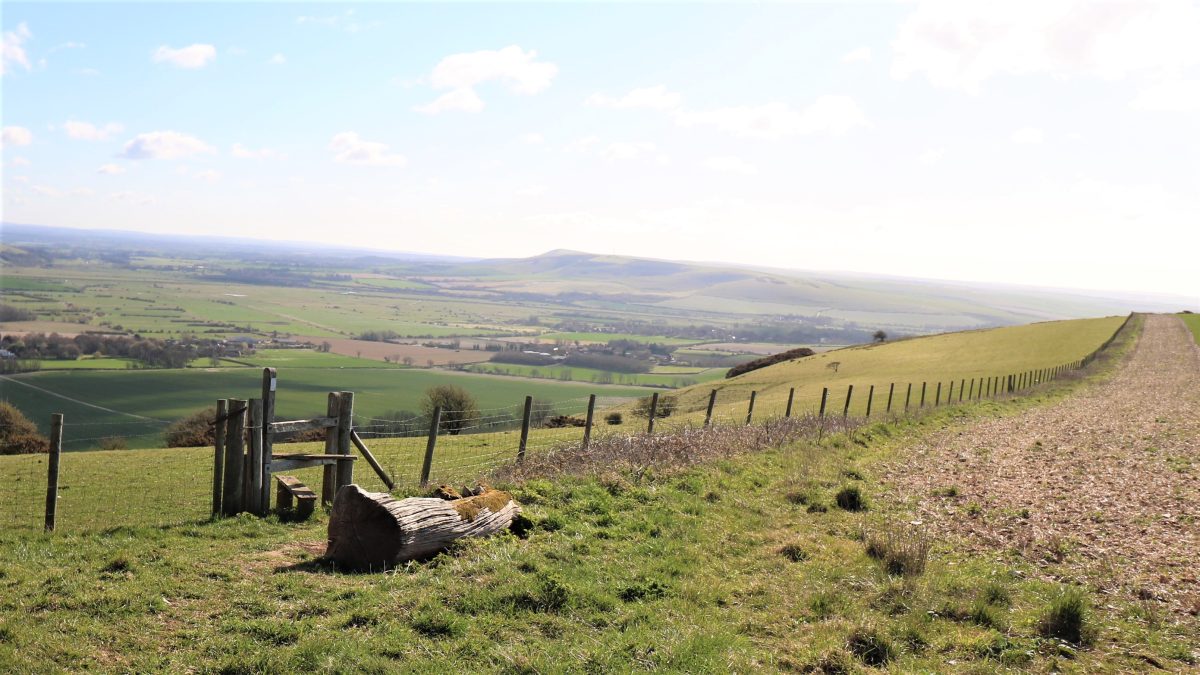
    It is strange but true, that I have walked over Iford Hill on the South Downs over three decades. I enjoy the magic when a forest wakes up in the springtime, but our lockdown currently precludes such adventures. Pragmatically/creatively, I have found myself revisiting local South Downs rambles from decades earlier. The weather forecast for today was some sort of Arctic disaster movie scenario. High up on top of the downs, it was cold, but the huge fluffy clouds and bright sunshine more than compensated for the over-hyped chill.

    I found myself revisiting some footpaths in a triangle between Lewes, Rottingdean and Saltdean. These were paths I first walked in the late 1980s and early 1990s. I used to escape up onto this downland when Brighton got too busy in summer.  I remembered wearing shorts and a T-shirt. Back then, the challenge was the heat, not the cold wind. The walk revealed itself to me step by step.  As I walked, it was like catching up with an old friend, as I remembered and misremembered parts of the walk. The walk witnessed somebody thirty years older, now with an arthritic knee, but still purposefully walking as if he knew where he was going. As I walked up Swanborough Hill, I remembered/fantasised about a resting place. Would that seat still be there decades later, or had I misremembered?

    Iford Hill Bench
    Iford Hill Bench

    I was delighted to see that the large tree trunk, which had been hollowed out to create a long seat, was still there. It offered a wonderful vantage point (see photograph) from where you could see Iford, Kingston near Lewes, Lewes, and so much beautiful countryside. There was a plaque (see photograph) remembering David Cripps and a second plaque remembering his Mum. The seat had been designed by pupils at Northease Manor School. I have the vaguest of memories of when this seat first appeared in the early 1990s; it became a favourite lunch stop for sandwiches on my 10/12-mile rambles back in the day. Now, it seemed to serve more as a milestone urging myself and others to remember. The land in front of this seat was bare from footprints, so many stories invested in this special place.

    The seat was being reclaimed by nature and I strangely approved. It was a wonderful spot in nature but exposed to all of the elements, nature was always going to claim it back. As I meditated on my journey through life, I began to wonder about the pupils who designed this seat. What twists and turns had their lives taken, what about David Cripps, was he a teacher at the school?

    The internet makes desk research too easy. I found in the January 2019 Weekly Digest of Northease Manor School a feature about this seat that had captured my imagination. A Duke of Edinburgh group from the school had encountered the seat on a hike. Oddly though, the feature had to acknowledge that they were uncertain of Mr Cripps association with their school and that an internet search had yielded no further information. I am certain that there was an association, but the memorial was placed three decades ago. Memories fade as we fade away. Again I found myself strangely comfortable with this passage of time.

    Update 24/12/22

    Unexpectedly, I found myself passing this bench again on a Christmas Eve downland walk from Lewes to Saltdean.

    As reflected on earlier the bench was slowly and elegantly being reclaimed by nature. As a resting place and as a wonderful viewpoint it gave joy to many ramblers. However, eventually everything and everyone returns to nature.