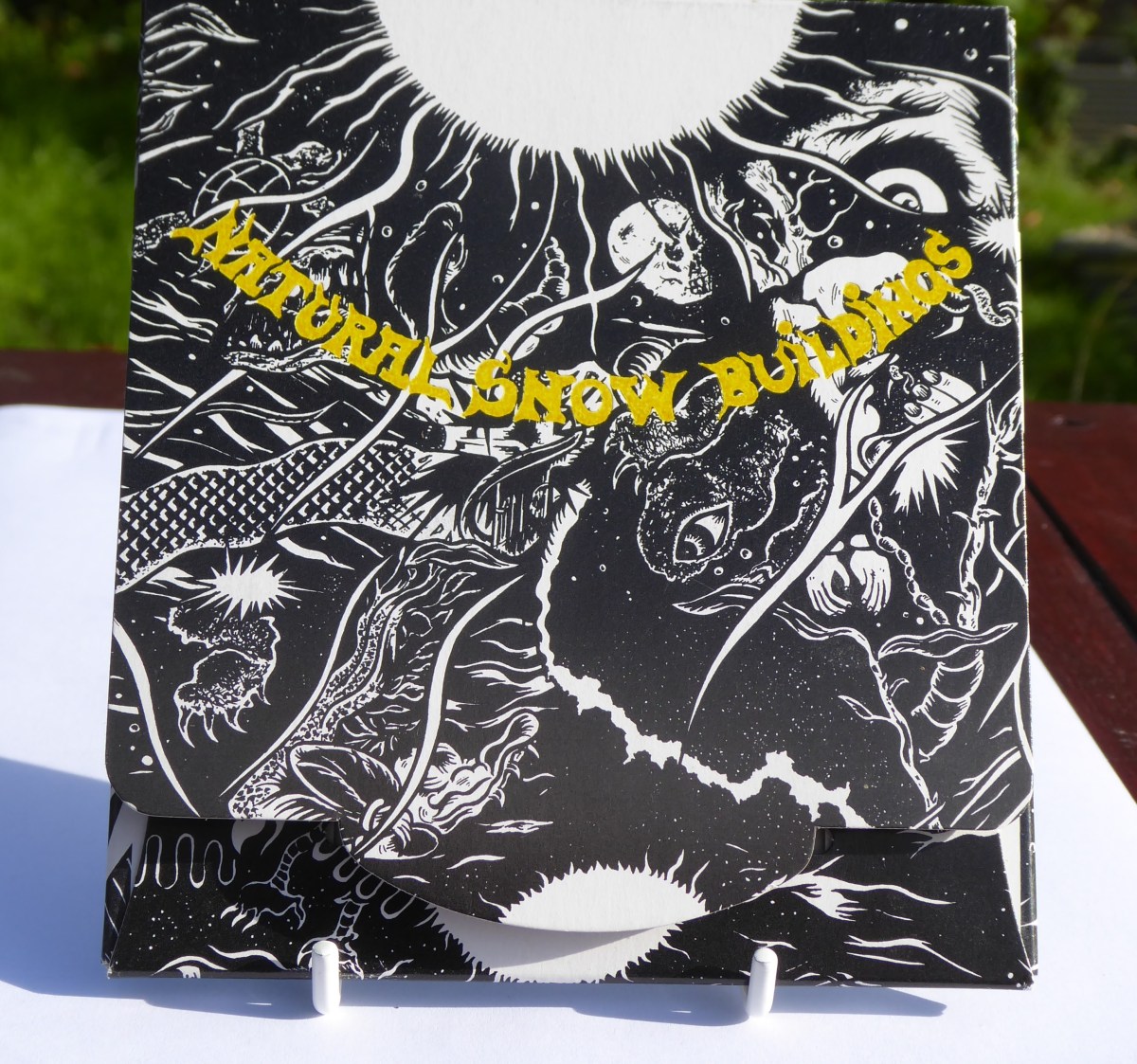
A celebration of the outsider art and music of Natural Snow Buildings (NSB) focussed on The Dance of the Moon and the Sun four CD set. Alternatively, musical accompaniment to a shamanic journey into nature, life, death and everything beyond.
Introduction
On August 9th 2021, I posted Natural Snow Buildings: An Appreciation. I was gratified that there have been 972 views to date. In this post, I focus on the most well-known NSB album, The Dance of the Moon and the Sun.
As outsiders NSB have always been enigmatic and a search these days invariably takes you to the NSB Archive. A title suggesting a hiatus, probably permanent, but who knows? The upside is that they have been able to make their large back catalogue far more accessible. The NSB Archive Soundcloud Page offers a helpful listing of their albums in general and the albums under review in particular.
The Dance of the Moon and the Sun over the years has acquired a legendary status. It has been released in different formats at different times with some releases being particularly rare. As always Discogs is very helpful in differentiating the different releases.
The earliest release of the album appears to have been a self-release in 2006 on the Not On Label. According to Discogs, there were 31 copies with a red sleeve and 19 copies with a blue sleeve. The album was recorded on 8-tracks at the home of the duo Mehdi Ameziane and Solange Gularte in Vitré (France) between 2004-2005.
In 2008 the album was reissued on Students of Decay (SoD/70-71) with a limited pre-order edition including two extra full-length CD-Rs, limited and hand-numbered to 120 copies and two mini-CD-Rs, both limited and hand-numbered to 250 copies.


The version I am listening to here is the 2008 reissue (SoD/70-71), but without the two extra full-length CD-Rs, but with the two mini-CD-Rs. I never received the two extra full-length CD-Rs which I guess were contingent on how quickly you pre-ordered. The easiest way to view the full track listing of the albums reviewed here is to scroll through the Soundcloud album listings until you reach The Dance of the Moon and the Sun (Deluxe Edition). The Deluxe Edition listing covers the 33 tracks from the two CDs and the two mini-CD-Rs. The total running time of these four discs is 3 hours, 22 minutes and 6 seconds.


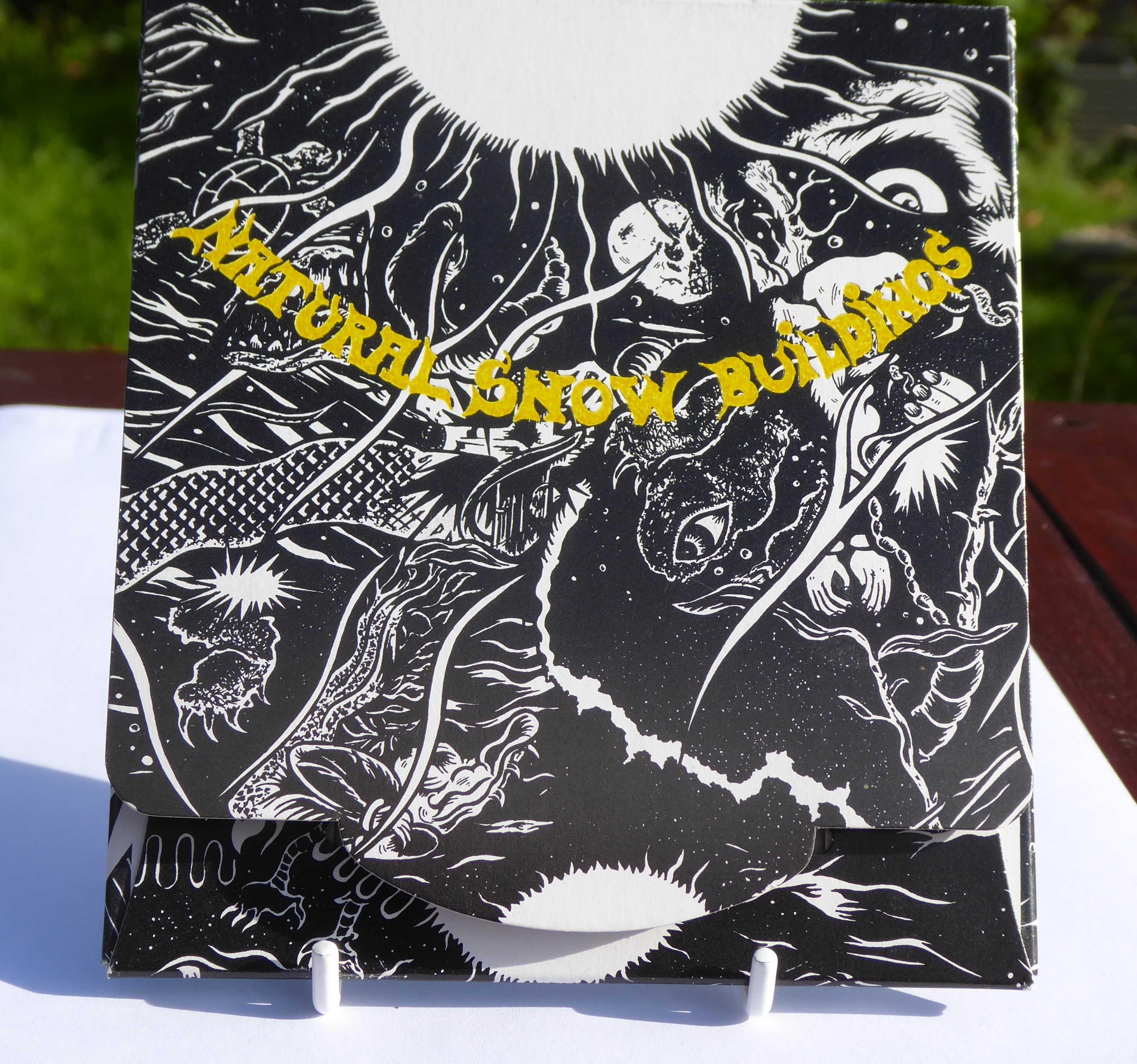
Between 2006 and 2008 the album sleeve and colour changes from the red often featured on internet references to the gold, white and black featured here. I prefer the gold of the sun and the moon, but I would say that. The discs are contained in a square cardboard CD box with tab locking and embossed lettering, as always, the artwork is beautiful. There are three inserts, two hand-numbered cards (the sundowner) and (the moonraiser) with a CD-size fold-out information sheet. On the fold-out sheet, there is a November 2007 extract from Nemo at Time-Lag Records. Nemo reminisces about the beauty of the music and the artwork and how quickly the red and the blue editions sold, concluding.
I had sold over half the whole pressing before I even knew just how quick these little beauties would evaporate and turn to myth. But so it goes, and as it should be, the myth is again reality … so enjoy the dance …
Yes, I am with Nemo the mythical aspect of NSB fuelled my interest and acquisition of the 2008 release and my writing this post. The liminal nature of the art, the music, and the distribution is as it should be.
Pagans, shamanism and other outsiders
I am fascinated by the natural world in general and nature religions in particular. NSB appear to share similar interests. It is not essential to share such interests, but it is informative when engaging with NSB music and art. Pagans before the arrival of Christianity would celebrate on the 25th December the birth of the sun. It was a time of optimism about the light, warmth and harvests still to come, rather than an extended eating and shopping experience. Today, everything we take for granted is contingent on the sun and the moon; our climate, our seas, and our agriculture. Yet strangely nature worship is still perceived as a pastime for marginal outsiders.

Shamanism accesses altered states of consciousness through varied methods. One approach involves hypnotic repetitive drums and rattles. I have engaged in such practices even experiencing becoming a salmon swimming through a quiet forest. If you want to experience a forest, I recommend a salmon’s eye view. There are many occasions on The Dance of the Moon and the Sun when the drums and rattles remind me of shamanic practices. NSB frequently employ repetitive drumming, rattles, shakers, church bells and other found sounds. Much of the music on the album has a ritualistic feel and certainly would fit a hypothetical cinematic goal of music to invoke the dead. Again, this chimes with a healthy respect for the ancestors amongst shamanic communities.
Time, place and mood
On the South Coast of England, it is October 2024. I have been fortunate enough to spend plenty of time recently roaming around local forests, on my own, but not alone. It has been a powerful time of misty reminiscence, leaves changing colour, and damp mustiness everywhere. A time of transition and melancholy.
October has been just the right time to listen to NSB transitioning and journeying music. This isn’t joyous uplifting music, but it does emotionally resonate. This isn’t spring or summer music, this is autumnal music. My mood is mellow, a mild sadness for what has been lost during a lifetime, but balanced with gratitude and acceptance.
It is fitting to publish this post on Halloween, alternatively, the Mexican Day of the Dead would have worked well. Tracks include awkward themes of death, dying and decay. NSB would make a very suitable house band here at woodlanddecay.com headquarters. I consciously chose to group the 33 tracks into a single playlist. It was why I needed to share the importance of time, place and mood. Different tracks will speak to you at different times and in different ways. So, in my study, lounge and on the bus the playlist has been accompanying me.
On one level it is sacrilege to convert four CDs into a single playlist to be randomly shuffled. I remember one ego-driven pop star banning her fans from shuffling her music on a lucrative streaming site.
Over time, I made a note of shuffled tracks which particularly spoke to me and the two following playlist entries are the outcome of that exercise. There was only one playlist, but I have differentiated them into two playlists to aid exposition. There is so much more on the four CDs, but I was keen to share emotions, rather than describe each track in a soulless mechanistic way.
Mellow melancholia playlist
Mellow melancholia is for romantics, lovers and the broken-hearted. On these tracks acoustic guitar is often prominent and often Solange’s lyrics are evident, or half evident, as often her words are barely discernible. It adds an ethereal misty quality to the music, though I feel like I am eavesdropping rather than hearing the poignant words being sung.
If you wanted to sample only one track out of the 33 tracks, I would respectfully suggest Wisconsin (11 minutes 59 seconds). Beautiful melodies are drenched in mellow melancholia. I never understood why women would choose to watch a sad film, but this track helps me to understand. Guitars gently plucked reverberate and build on earlier echoes. After about three minutes we go into a slower reflective refrain which seems to gently spiral up into the ether. I imagine being spirited up to some kind of cosmic holding zone. And then a more purposeful melody begins to build, gaining confidence, but ever so slowly. You find yourself waltzing to an unknown destination. You intuitively know the music is taking you to a good place, you don’t want the repetition to end as you mainline on melody. Inevitably the melody slows down, sadness invoked for something lost. I never want to leave this place.
Eu un miroir, obscurement (4 minutes 40 seconds). This is beautiful, hypnotically repetitive music. There are found sounds of women’s voices, they are background to the rhythmic loop that has been set up. There are slight variations, but mere ripples in the water as my canoe is gently rocked sailing towards the lemon-low light of an unknown celestial place.
Carved Heart (1 minute 7 seconds). Desperately sad love song. NSB chose to open with this track, in a way the most accessible, but in another way the least representative. The breathy lyrics are discernible, even to my weary ears. When Solange sings about “the ring carved on your finger” I imagine the imprint left after a ring has been worn for a long time. However, she laments that you cannot throw it away/give it back, I imagine love lost. She refers to “her voice from the grave”. The track ends with the reflective humming of somebody lost in a world of their own.
Tunnelling into the structure until it falls (7 minutes 5 seconds). The enigmatic nature of this track makes labelling/classifying challenging. It begins with an upbeat, meditative and reflective rhythm, imagine coming out of a depression. The drumming subsides and these rhythmic loops take over. The music quietens and slows drawing you into the breathy eerie lyric “She’s stealing your soul, piece by piece.” As a hopeless romantic I heard this lyric as “she’s still in your soul” a reassuring call – back to Carved heart. It was only when I checked what I was hearing on a lyric site that I appreciated the call–back might be darker.
Raising the dead playlist
In contrast to the mellow melancholia playlist, the Raising the dead playlist is far less reflective, more percussive, and more agitated. The previous playlist was about fondly remembering the ancestors. This playlist is about the turbulent and at times traumatic journey to reach the ancestors.
If you wanted to sample one track in this spirit it would have to be Trench (2 minutes 42 seconds). If nightmares had musical accompaniment, this would be the deeply disturbing soundtrack. It reminds me of my relationship with early 1970s horror movies as a teenager, simultaneously attracted and repulsed. I think guitars are feeding back and indistinguishable voices are played backwards. Profoundly, disturbing and remember that I was a teenage Throbbing Gristle fan.
They raise the dead don’t they (11 minutes 53 seconds). The deep horn sounding at the beginning offers an ominous call to arms. Tambourines, feedback, and repetitive drumming all create a strong feel of a Native American Indian ritual. A very particular form of shamanism, unique to a particular place in the world. Peyote is now ingested, initially nothing seems to be happening. The repetitive drumming continues for a few minutes and then slows slightly, sounds begin to splinter and subtlety is introduced with the drumming continuing in the background. Sounds swirl like mists around a fire pit, and melodies begin to dance out of the fire pit like flames. As that disco tune once went, we are lost in music, caught in a trap.
A ten guardian – spirits mother……. (9 minutes 35 seconds). I am caught up in stereotypes from the Westerns of my formative years. After a drone introduction, drums and rattles are introduced alongside the drone feedback. The percussion is very regimented and purposeful suggesting preparation for confrontation. After about five minutes the percussion ebbs away and gives way to gentler harmonies. The track concludes with ghostly unspoken vocals echoing and reverberating.
Cut joint sinews and divided reincarnation (15 minutes 20 seconds). A very slow ponderous introduction sounds like a deep timpani drum or perhaps a bass guitar feeding back. It suggests to me that we are entering a place or a state of mind. Then the extended drone is interrupted by percussion, which begins to build up pace, this is in sharp relief to the slow drone. The repetitive drumming accompanied by the tambourine enables the waking/reincarnation of the ancestors. As the repetitive drumming is extended it becomes quite hypnotic before slowing down and moving into echoes, reverb and feedback we are about ten minutes into this track. A muffled vocal track is introduced into this melee, it is more troubling than reassuring. A different muffled voice is played backwards a deep church bell ringing as accompaniment.
Dawn celebration (7 minutes 20 seconds). Native American Indian music, drums, rattles, shakers and harmonic singing, very gently ebbs and flows. Slowly, the early morning sunlight shines through with guitar feedback which sounds almost like an organ. The ritual is complete.
In the morning after the night, I fall in love with the light
The words above are taken from The Orchids lyric by Genesis P. Orridge. No longer with us, but certainly, a cultural outsider who was open-minded about paganism, shamanism and so much more. His lyric acknowledges the duality of dark and light, echoing the importance of the sun and the moon for everything we do. It was never about either/or as we are invariably force-fed. We are sold a world of illuminated, bright shiny lights, baubles and consumerism. But we need the dark/the night if we are to fall in love with the light. You cannot have the sun without the moon. I have been overindulging in dark NSB themes and melancholy melodies and it is now time to step out of the dark into the light.
As my come down (up) music, The Supremes Gold collection invokes the light, no more reaching for the dead today. The lovelight shines celebrating love, life and joy in lightening the darkness. We need the sun as much as we need the moon. We need the dark as much as we need the light. Unfortunately, spirit guides such as NSB who can guide us through the dark are too few and far between.
 Woodlanddecay