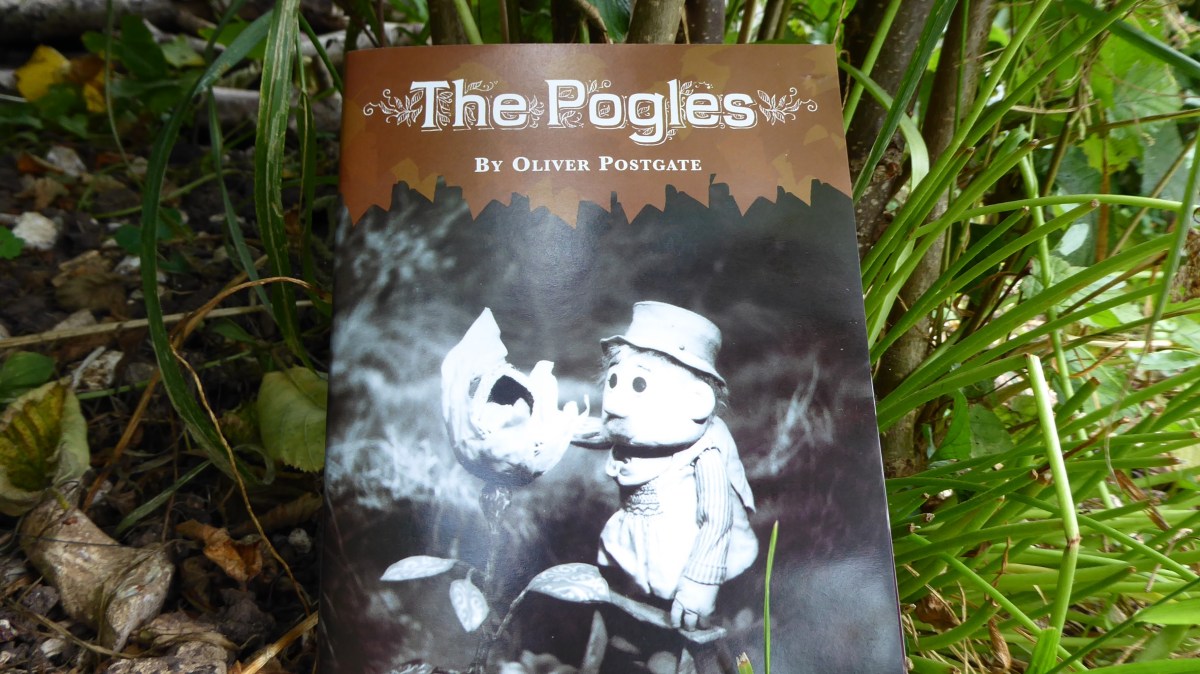
Did the BBC ban the children’s television programme The Pogles and if so why? In this nostalgic post I reflect on what happened, or at least what I think happened.
Introducing The Pogles
This post will not be impartial, The Pogles made a huge impression on my formative early childhood years in the sixties and I believed that they were real. Many memorable children’s television programmes of the sixties and seventies were produced by Small Films. The creative forces behind Small Films were Oliver Postgate and Peter Firmin. Musical accompaniment came from Vernon Elliott and his Ensemble only adding to the magic. On the Small Films website, Oliver Postgate captures the essence of their enterprise.
Once upon a time, not so long ago, there were two overgrown boys called Oliver and Peter. And Peter lived on a farm. It was a rather unusual farm because it didn’t grow any crops and there were no sheep or cows, but it was the home of Ivor the Engine, Noggin the Nog, the Clangers and of course Bagpuss. And there they made the most beautiful, the most brilliant, funny old Small Films in the whole wide world or so we like to think.
Source: Small Films website
Small Films produced The Pogles and Pogles’ Wood for the BBC between 1964 and 1968. The Small Films site evocatively describes these programmes as “the story of woodland folk, who lived in a tree with a magic bean plant.” The farm in Kent in which The Pogles was filmed, incidentally backed onto a woodland. I was fortunate to see Oliver Postgate and Peter Firmin in person at the National Film Theatre in 2004. I have included a link at the end to footage taken by an audience member of this event.
The Dragons’ Friendly Society
Today, it is fairly easy to access clips of television on YouTube-type sites. If we go back twenty years, you had no access to these programmes. You were reliant on programmes being rebroadcast (unlikely to happen with banned programmes). This was a fertile context for urban myths to grow.
In shamanism, you access other worlds through holes in the natural world. You visualize yourself going down the hole en route to the lower, middle or higher world. The Dragons’ Friendly Society provided the portal to revisit The Pogles and Pogles’ Wood. This enabled me to rewatch episodes I had not seen in many decades. When I revisited the site to write this post, I had very mixed emotions. The proclamation on the homepage reads:
Congratulations! You have found the secret treasure of The Dragons’ Friendly Society.
Source: Dragons’ Friendly Society website
Originally, it did feel like discovering treasure. Today, the homepage sadly remembers the passing of the two key players in this story – Oliver Postgate and Peter Firmin.
You can purchase DVDs of The Pogles and Pogles’ Wood series (and Pogles’ Choice and Pogles’ End), but also there is freely available information to access on the site. In searching the site for information pertinent to this post, I stumbled across a poignant reference to The Witch.
Oliver Postgate will be telling us more stories of the Witch soon… please watch this space. There were a number of stories written for the Witch which were never filmed because the BBC considered them too scary.
Source: The Dragons’ Friendly Society website
A unique sadness surrounds a storyteller’s untold stories. However, his stories of woodland folk live on, reimagined in the retelling. Before exploring the BBC ban, I needed to re-watch the six episodes in question.
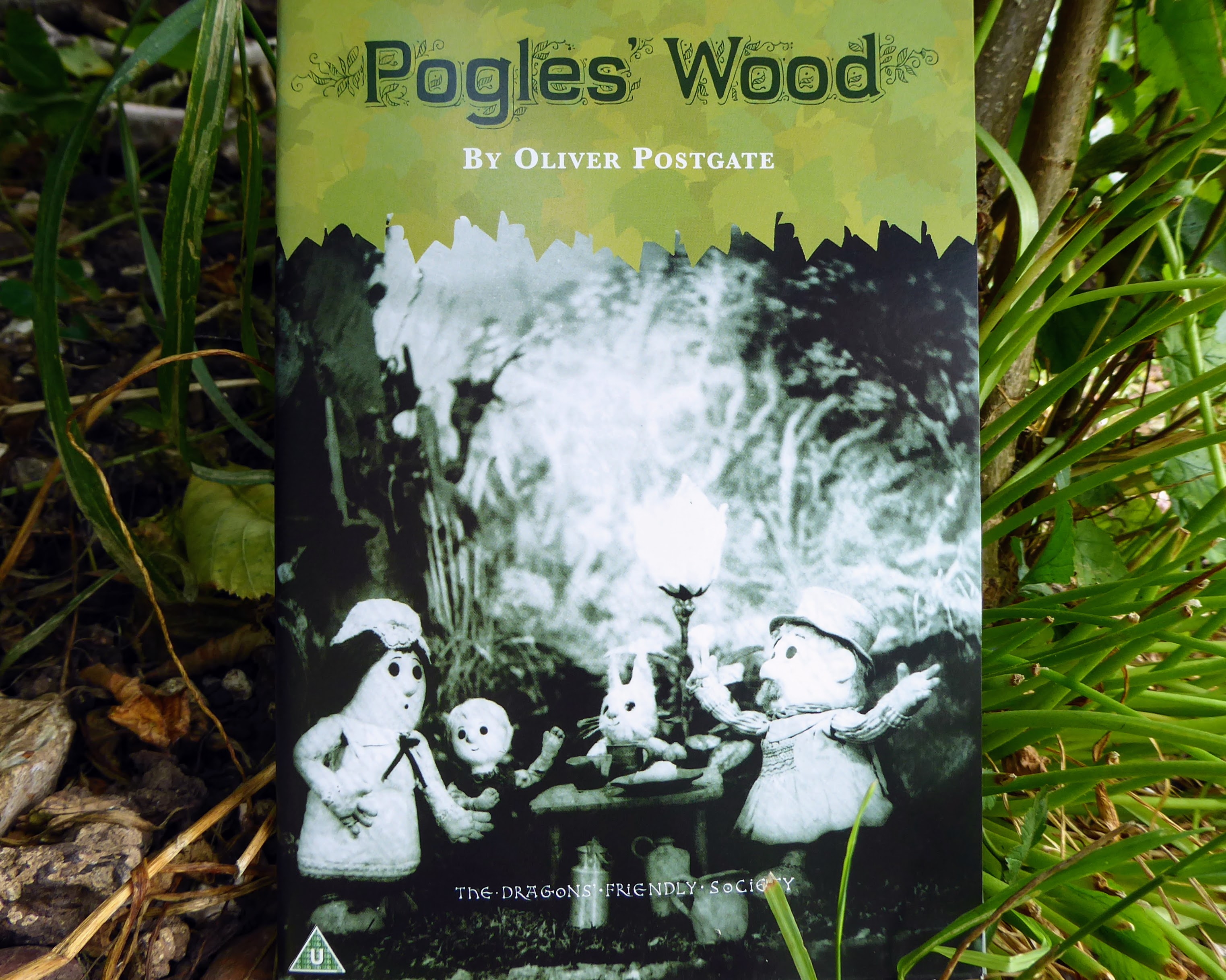
Watching The Pogles today
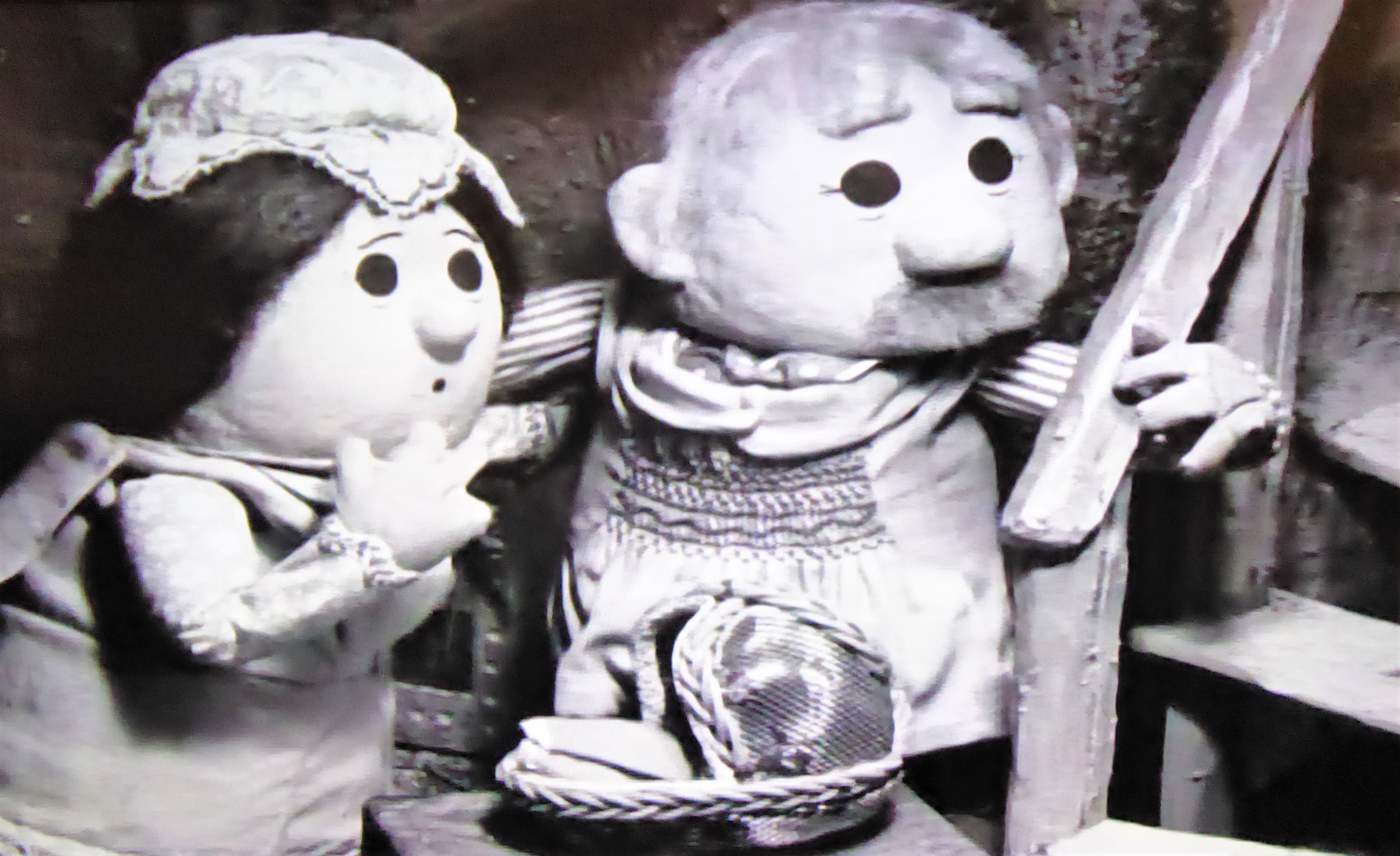
It’s 2023 and I have just watched all six episodes of The Pogles series again. Watching television programming from over fifty years earlier is weird. In my imagination, The Pogles exist in the most verdant of technicolour. However, Pogle reality is a much duller black and white. We have been spoilt with the evolution of special effects over the past fifty years, probably at the expense of our imagination. That said, rewatching the episodes made for charming viewing and still captivated this viewer.
A listing of episodes will often preface the storyline, but as you will see the titles below were very oblique even innocent (possibly intentionally, discussed further in the next section). The Magic Bean, A Silver Crown, Pogle Go Home! A Flower for Wishes, The Singing Bird and King of the Fairies.
Mr Pogle goes into the wood in search of broad beans for Mrs Pogle, but all he can find is a very big bean. As it transpires this is The Magic Bean. They plant the bean and the magic plant subsequently bears the baby. Mr Pogle’s interaction with Mrs Pogle is very sexist. For example, at one point in this first episode, he threatens to tip Mrs Pogle out of bed if she doesn’t make his breakfast. The subtler learning is that Pogles do not seem as obsessed with the need to work and consumerism as everyday folk outside the woods.
A beautiful notion runs through the series that it takes a hedgepig (aka a hedgehog) to wake a Pogle because they are deep sleepers. However, in the second episode, they are woken by noisy fairies chattering too close to their home. Unable to quieten the fairies, they investigate why they are being noisy. They find a baby cradled in the magic plant wearing A Silver Crown.
Mr Pogle on journeying into the wood meets an old lady whose cart is stuck. She asks for help and leaves saying ‘blessings on you, kind sir.’ However, the old lady (aka the witch) has stolen the baby and hidden it in her cart. The fairies warn Mr Pogle, urging Pogle Go Home! However, he is caught by the witch.
Mrs Pogle troubled by the baby being stolen and the absence of Mr Pogle, turns to the magic plant for help. The magic plant explains that the old lady is a witch and suggests A Flower for Wishes which will grant Mrs Pogle two wishes. Her first wish is to be with Mr Pogle, but it transpires the witch has trapped him in a wooden cage with the stolen baby nearby. The witch then also places a wooden cage around Mrs Pogle.
The witch wants the silver crown because it is the crown of the king of Fairyland. However, Mrs Pogle had cleverly hidden the crown inside their tree. The witch threatens to turn them into frogs unless Mrs Pogle reveals the location of the silver crown. Mrs Pogle uses her second wish to wish the witch into a bungle of twigs, all alight and burning.
Mr and Mrs Pogle return home with their baby. The fairies bring them The Singing Bird. A jug of milk is left for the baby, but it is a trick. Mrs Pogle states ‘I don’t like it!’
The jug is part of the trickery of the witch. In the final episode, The King of the Fairies, the witch takes the form of an old boot attempting to kick down the door. Mrs Pogle shouts at the witch “You’re a horrible thieving hag!” The singing bird places the crown on the head of Mr Pogle giving him the power to banish the witch. They want to turn her into something, but the concern is that she will just turn back into herself. Mrs Pogle concedes ‘It looks like there is nothing’, but this gives Mr Pogle an idea ‘nothing – be nothing at all.’ They turn the hag of the night into nothing.
So, what’s not to like?
Banned by the BBC?
The logical place to start is with the BBC’s account of what happened. On the 5th November 2015, the BBC site referred to banning The Pogles for the following reason.
The first series was shown in 1965 and never shown again. The witch was considered far too scary for younger viewers.
Source: BBC website
The article was linked to the launch of the now-defunct BBC Store explaining that some television programmes previously banned were now being made available.
Here’s a collection of a few programmes that were in their time on the BBC’s “do not show under any circumstance” list and a few that will probably never appear on the store.
Source: BBC website
An internet search reveals other commentaries which go beyond the official stated BBC position. The musician Andy Bell offered another reason for the BBC ban “…because Mrs Pogle drank too much elderberry wine.” This is an intriguing notion. Though, Mr Pogle drank as much bilberry wine as Mrs Pogle. There was even an episode in which Mr Pogle shouts “Wife where’s my bilberry wine?” Running with Andy Bell’s reasoning The Pogles were drinking bilberry wine for breakfast certainly not a good example for young children even in the permissive sixties. At this time, I was a big fan of Camberwick Green and my hero was Windy Miller. I remember an episode featuring him getting drunk on cider and falling asleep at work, not a good example for the young flour millers of tomorrow.
In searching the internet, the challenge is that the search engine wants to tell me the story of why the BBC banned A Fairytale of New York by The Pogues, close but not close enough. I discovered the wonderful The Anorak Zone site with a ranking of The Pogle’s worst to best episodes. Episodes were ranked from least scary to most scary. The ranking provided a very creative device to tell the story, as well as, the back story of why the BBC banned the series. I concede that the quality of this ranking negated my desire to write this post, but as we say in television land – I’ve started so I will finish.
I have included a link at the end to The Anorak Zone and it is recommended reading for Pogle scholars out there. I found it intriguing that according to Postgate’s autobiography Seeing Things it was explained by the BBC Head of Family Programmes that evil supernatural elements, including witches, were not welcomed. The third episode Pogle Go Home is ranked as the scariest although with the caveat that there isn’t much to differentiate the scariness of episodes.
The Spooky Isles account of the BBC ban majors on the magical aspect of Pogles’ Wood. For anyone still trying to grasp what these woodland folk were all about, Simon Ball on the Spooky Isles site neatly captures their essence.
…the eccentric magical whimsy that was Pogles Wood, featuring a tiny woodland family who lived in a tree stump with their incomprehensible rabbit-squirrel hybrid pet Tog and a heroically alcoholic plant who played the violin, so long as he was plied with bilberry wine.
Source: Spooky Isles website
Simon reminds me that they were magical anarchists living in a woodland commune, at one with the wood and its other inhabitants. They were the antithesis of role models for children and all the better for that. Simon highlights The Pogles series being sold to the BBC unseen. Remember this was the early days of children’s television programming and much of the content had already been repeated too many times. The other issue he highlights is the scheduling was just before the children had their afternoon nap, so it had to be relatively soporific. However, he highlights aspects of The Pogles that would have troubled a young mind:
- Fairies hiding the fairy king’s baby in the boozy plant’s flower,
- A terrifying witch, who bundles Mrs Pogle up into a sack and hides her under the floorboards,
- A witch who kidnaps the baby,
- The witch transforms herself into a boot to kick in the Pogles’ front door and
- A magic wishing flower that in Mrs Pogle’s hands is used to burn the witch to a crisp!
He cites Peter Firmin “However, we were asked to do another series, so long as we lost the magic element. We introduced a son Pippin and his pet Tog and replaced the magic with educational material about the countryside, showing documentary footage of things like honey gathering and this revised show became Pogles’ Wood.”
The Pogles was scary, but it was also magical. In the successful and very enjoyable Pogles’ Wood, we lost the witch and some of the woodland magic. That was the trade-off the BBC mandated to enable further commissions of Pogles’ Wood and other Small Films productions.
Conclusion – The Trouble with Magic
The merit of the BBC ban is contingent upon how you view Pogles’ Wood. The BBC probably fielded complaints from parents, so, on behalf of the audience, they were saying – too scary. Oliver Postgate conceded in his autobiography with hindsight that the first series was probably – too scary. I watched all six episodes again in writing this post and could understand the scary banning rationale. Equally, The Anorak Zone and Simon Ball (Spooky Isles) acknowledged what it must have been like for a small child – too scary. Children sometimes have fears about not waking from sleep. So, the wonderfully existentialist notion of turning the witch to nothing would not have been ideal preparation for their afternoon nap.
I believe that as well as the reasonable psychological child safety rationale for adding Pogles’ Wood to the BBC do not show under any circumstance list, there was a more cultural rationale. Witches and witchcraft have been demonised throughout history. Whilst today witches and wizards are very prevalent in children’s and adult television programming, this was not the case fifty years ago.
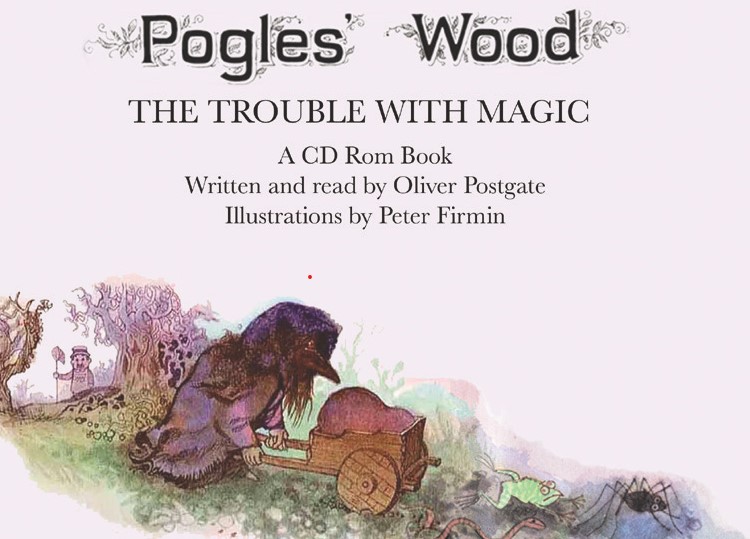
Pogles’ Wood: The Trouble with Magic was a CD Rom of stories told in the Pogles annuals between 1967 and 1974. It offers us glimpses of shamanic consciousness way ahead of their cultural acceptability today; journeying, the power animal, the connection with nature and the magical uses of plants. The CD Rom which is still available from The Dragons’ Friendly Society offers a poignant ending to this tale of woodland folk, simultaneously celebrated and censored. You see the colourful illustrations from Peter Firmin accompanied by audio of Oliver Postgate telling the stories. His earthy and otherworldly voice tells the eighth and final story The Witch. The storyteller’s story is no longer untold. We have a happy ending and if the BBC had allowed it, Pogles’ Wood would have had a happy ending. This concluding quotation is taken from the Introduction to The Trouble with Magic.
…the central character was a particularly evil witch, and the BBC did not care for her. Had the BBC but known, the story cycle ends with the witch ceasing to be evil and becoming a friend.
Source: Pogles’ Wood – The Trouble with Magic
Links
BBC releases programmes it had previously banned
https://www.bbc.co.uk/news/entertainment-arts-34726735
Camberwick Green (Series One, Episode Two) Windy Miller
https://www.imdb.com/title/tt1256751/
The Anorak Zone – Worst to Best The Pogles
https://www.anorakzone.com/poglesrank.html
The Dragons’ Friendly Society
http://www.dragons-friendly-society.co.uk/
From the desk of Erasure’s Andy Bell: Children’s Shows and Movies from the 60s and 70s
Oliver Postgate and Peter Firmin National Film Theatre 2004
https://www.youtube.com/watch?v=eIJ-CpLvww4
Watch with Mother: How the Pogles Traumatised a Generation by Simon Ball
The Pogles: Banned by the BBC? Woodlanddecay
2 replies on “The Pogles: Banned by the BBC?”
Thank you for your interest, yes the world today is a very different place, but I am grateful the BBC still exists.
I don’t imagine that these lovely programmes would reflect much of what the modern BBC feels it needs to promote!