Introduction
The financial hardships of the 1970s and 1980s and the ideological agenda of the Conservative government fuelled many strikes and demonstrations. However, the Poll Tax demonstration stands out in terms of scale and level of conflict. Positively, the demonstrations accelerated the political demise of the Prime Minister, Margaret Thatcher.
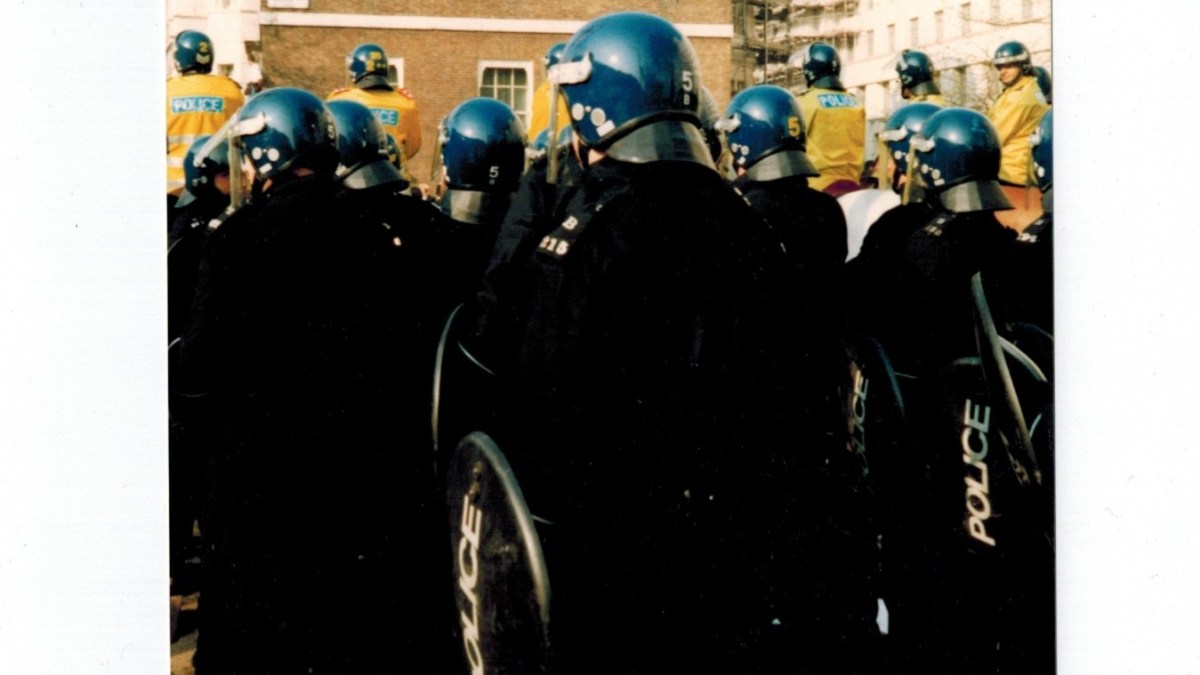
On March 31st 1990, I attended the national demonstration in central London against implementing the Poll Tax. The media almost unilaterally focussed on isolated though violent disorder. They misrepresented what I perceived as a huge and largely peaceful demonstration of collective dissent. As memories fade, competing histories inform and misinform us about what happened. Today, the only certainty in a mediated world is that I was there.
Firstly, as scene setting, I offer a little background about the Poll Tax and why it provoked such strong reactions. Secondly, I introduce my interest in journalling. Thirdly, I share my verbatim journal entries after attending the demonstration. Fourthly, I conclude with reflections on a significant moment in political and social history.
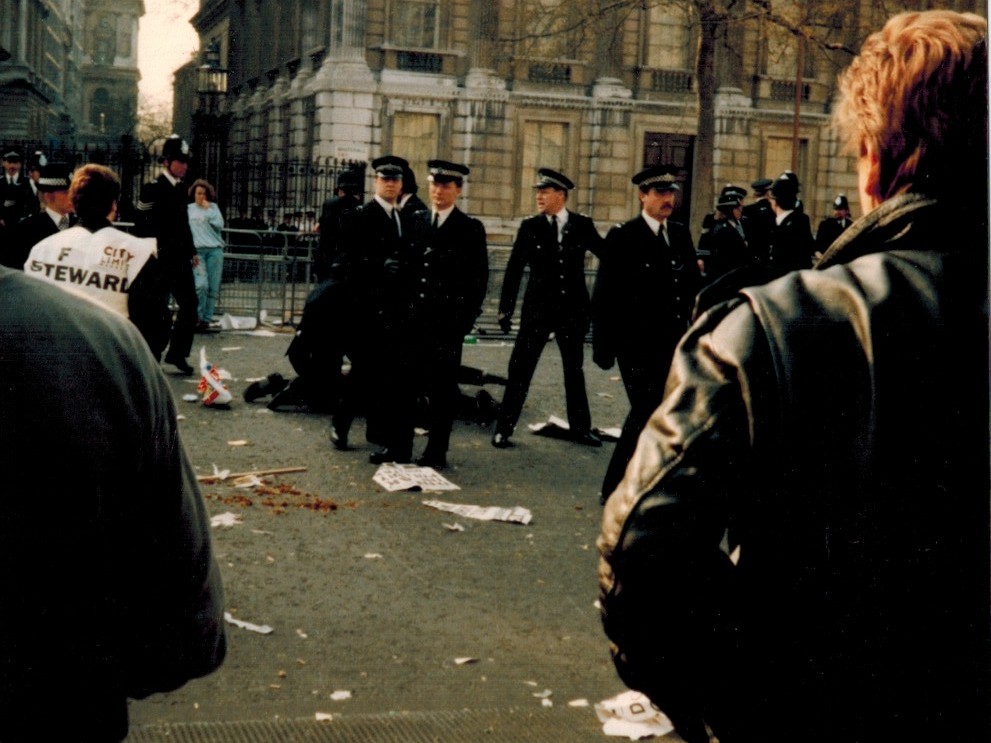
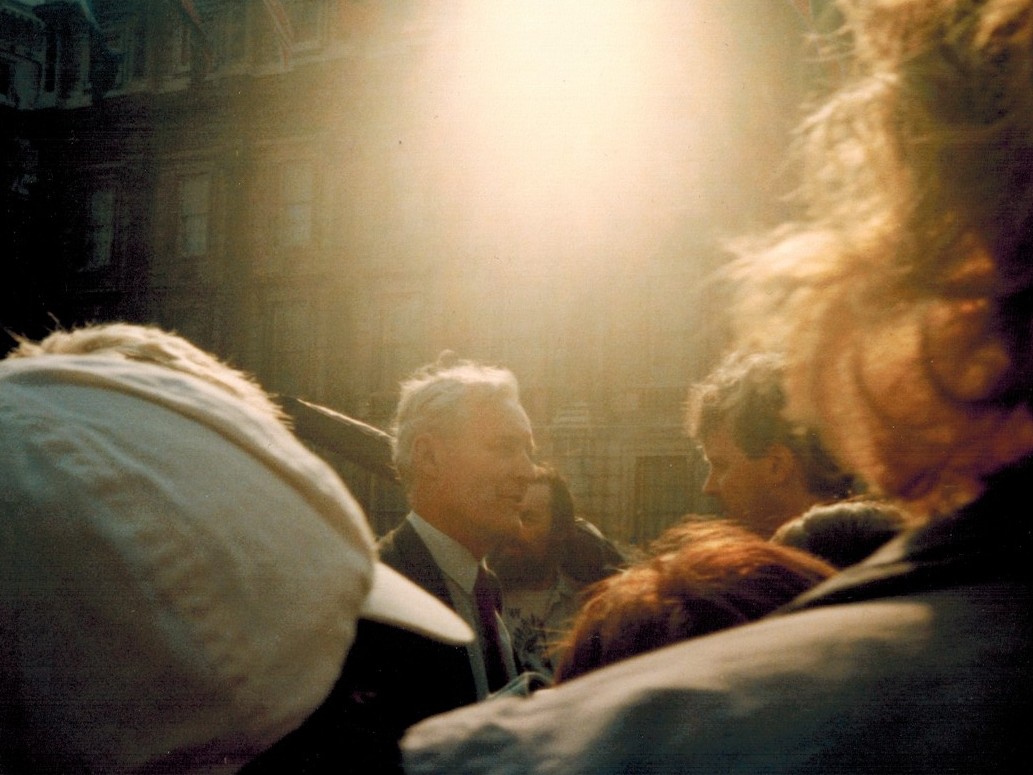
I have included scans of photographs taken at the demonstration. Digital photography, taken for granted today, was not available in 1990. Unfortunately, I ran out of film when we reached Northumberland Avenue. That was frustrating at the time, and it still is frustrating.
About the Poll Tax
The political intent behind the Poll Tax (aka the Community Charge) was to shift from rates based on the value of a property to a flat rate levied per person. For example, a millionaire living in a mansion would pay the flat rate once, whereas six people living in a small terraced house would each pay that flat rate. For wealthy Conservative voters, the appeal was that it shifted the tax burden in communities onto the poorest. The Conservatives campaigned on this agenda, which gave them a democratic mandate to implement the Poll Tax. Thankfully, we lived in a country where the right to protest and convey dissent existed.
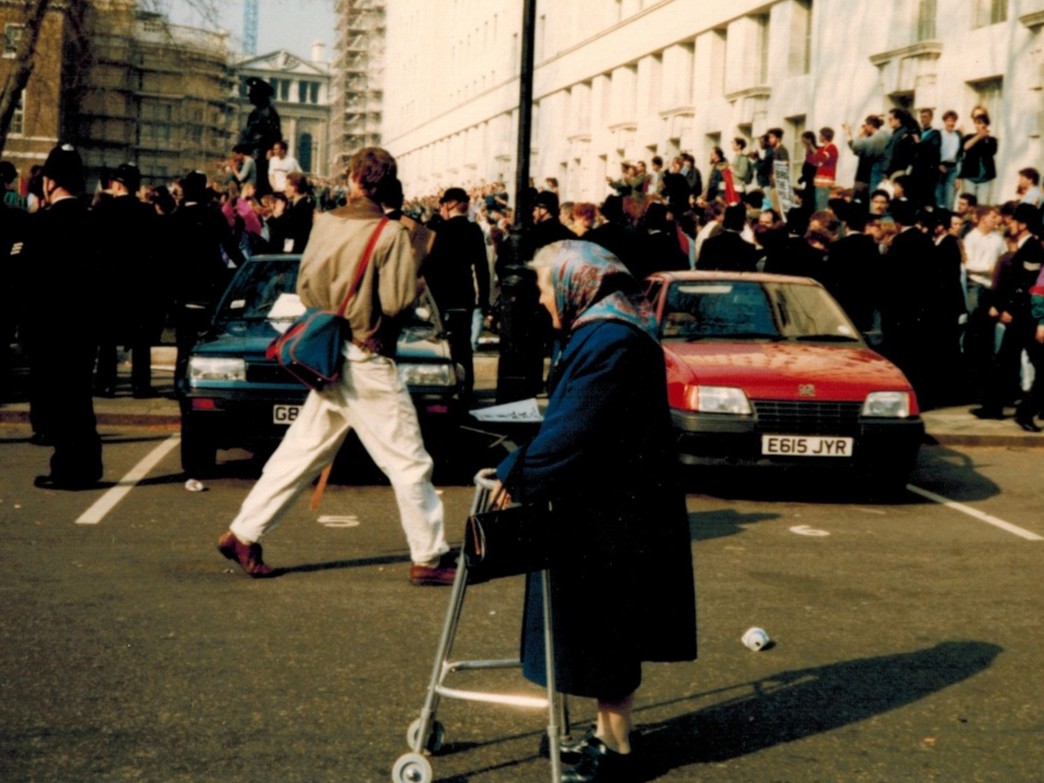
There were many demonstrations against the Poll Tax, but the London demonstration on March 31st 1990, was the largest. The opposition Labour Party did not support the demonstrations. However, an unintended consequence was that this stance gave impetus to very disparate campaign groups aligning against the Poll Tax. This was a bottom-up movement, rather than something orchestrated from above by Westminster politicians.
History has acknowledged that the Metropolitan Police and the Government underestimated the breadth and depth of feeling against the Poll Tax. This underestimation had huge implications for this demonstration, particularly how it proceeded and was policed. I was biased then, and I am biased now. So, you best align your tastes with the buffet of competing historical accounts of what happened, available via any search engine.
Patient Compliance – A Reflective Journal
I captured experiences, feelings and emotions in hand-written journals over many decades. Each journal had a title, and this one was called Patient Compliance. The title was taken from a pharmaceutical notion that part of the success of a prescribed medicine was contingent on patients adhering to their prescription. Politically, patient compliance offers a metaphor for understanding the maintenance of order within Western societies.
As I began writing this post, I recalled that thirty-five years ago, I had written up my experience of attending this demonstration. However, I had completely forgotten writing the journal entry.
It is tempting to sanitise the following journal entries. My outlook has changed considerably, but I have decided against such retrospective editing. Also, writing by hand rather than word processing was more prone to mistakes. I have used the “sic” abbreviation to signpost awareness of the more blatant mistakes, but I haven’t retrospectively proofread and corrected my many mistakes. Italics indicate that these were my verbatim words at that time. The first two paragraphs are not Poll Tax related, but convey my naïve optimism for life at that time. A few short excerpts post-March 31st explain what happened next.
Saturday, March 31st 1990
Yesterday went OK it was the deadline for the students projects so they were quite worked up. I never really settled to my work due to many interruptions but it was quite a social day. In the evening things settled down and I was able to get on with some work.
Over recent weeks I have been learning to type, whilst parallel to this I have been continuing with my one fingered typing. Last night I made the cross over it felt great as I knew it would make such a difference. I was slow and made errors. But I know with the volume of typing I do I can swiftly become proficient.
Today I awoke feeling exhausted. I suppose it is understandable after a long week. I had to rise because it was the eve of the implementation of the poll tax and there was a march in London. I wasn’t sure what to expect but the weather was good.
As I arrived at the Oval tube station I could feel something. There was loud drumming and thousands of colourful people, placards everywhere quite incredible. Almost a carnival feel to the whole proceedings.
I bought a copy of Class War from one of the anarchists. I suppose I lost patience with these anarchists long ago due to their celebration of violence against the police. In the poll tax special they were celebrating the injuries inflicted on the police to date. It was pretty revolting, what I do like about them however is there(sic) sense of humour. They were marching beneath their usual black flag, but in smart lettering this time it had “Freemasons against the Poll Tax”. It sums up there (sic) sense of humour.
The march was huge and friendly until we reached Parliament. Then the police appeared to be trying a policy of divide and conquer. I was in the middle and began snapping (photographing). Things got progressively worse as police charged with horses and riot squads arrived. I think what struck me was the setting “Parliament Street” and the entrance to “Downing Street”. We swarmed over dignified buildings, debris everywhere police trying to regain control. Tony Benn giving an interview in the middle. I was photographing events but must confess shaking so I suspect I got very little.
We were later moved onto the other flashpoint which was Northumberland Avenue just off Trafalgar Square. What struck me here was the noise, there was drumming and people banging whatever they could it heightened the atmosphere. A large building next to me was set alight. The police were at both ends and it began to look a bit tricky. It was one of those days when it wouldn’t have been too difficult to be arrested.
I departed around 6.00pm I could see there was going to be more trouble. I felt quite as I think many others did. I think in this sort of battle I am not sure what would have been success. But whatever it was we didn’t achieve it.
I left and returned on the train it felt so unreal. Posh people talking trivia, they talked as if nothing had happened. A few minutes earlier I had been in a “riot” but on the train everything was calm. The status quo I suppose, I wound a “police do not cross” tape up which I picked up as souvenir.
I videoed the news tonight on both channels, it was history and I had been part of that history. The riots had got worse and spilled over Central London 50 to 60 police injured and 300 arrested at the last count.
It appears that the anarchists were to blame. The TV news showed it from their perspective, but it made me realize how little you can see whilst in the middle of it. The news showed a woman being trampled with a police horse charge. I saw bloodied heads. The blame is being apportioned, I would like to blame the police but on the whole they were good humoured.
I don’t think they would let a second march happen again, I don’t think I would go a second time but I am glad I went time (sic).
Sunday, April 1st 1990
I’ve thought a lot today about yesterday’s trouble although it is difficult to reach any firm conclusions. I went walking in some newly discovered woods between Hailsham and Polegate. The weather was great and the woods were fascinating. Tonight I feel real weary, it is not the way to start another week.
Tuesday, April 10th 1990
… general journalling … Jane the temporary secretary wound me up today offering some sort of poll tax rebate. It all seemed to be stupid. Today, I received some useful information about resisting the poll tax and I today made up my mind not to pay for definite, although I accept they will take the money from my salary.
Concluding Reflections
Despite Labour Party’s opposition to demonstrating, the Poll Tax was abandoned in favour of a fairer form of Council Tax, which acknowledged property values and the ability to pay. Margaret Thatcher departed from her role as Prime Minister. I believe (correctly or incorrectly) that bottom-up political dissent was the main reason the Poll Tax was abandoned and for the departure of a divisive Prime Minister.
In 1990, I believed the Poll Tax was an evil, self-serving piece of ideology, and I believe that today. I am glad I participated in the demonstration. You had to be there to make a difference. If the Poll Tax were proposed today, I would march again.

My sadness was that I attended many of these demonstrations on my own. Ironically, an individual engaged in collective action. Journals were my significant other for many years. In reading the journal entry for this post, it was a profound shock to read myself, thirty-five years younger, speaking through the Patient Compliance journal entry. As that song lyric goes, the ghost of a memory. I would happily trade the wise cynicism of today for the naïve optimism of yesterday!
Pay no Poll Tax 31 March 1990 Woodlanddecay
One reply on “Pay no Poll Tax, London, March 31st, 1990”
[…] Walking through London as part of the 1990 Poll Tax march. […]