
Introduction
On the 4th November (2025) I went on an enthusiastic pilgrimage to a sewage pumping station, begging the question why?
I discovered Sir Joseph William Bazalgette (Bazalgette) and his contribution to civil engineering about fifteen years ago. I was delving into project management pre-history, the early days, when learning about the management of large projects was still embryonic.
I never anticipated my deep dive would take me into the world of sewage and sanitation projects and the even murkier activities of the projectors. In The Age of the Projectors, Keller (1966) offered us a definition of projectors as “the promoters of schemes for industrial expansion on the grand scale.” This firewalled History Today article is well worth a read if you are interested and have access.
Strangely, projectors remain completely hidden to most academics and most of society. Projectors definitely did exist as I will illustrate by contrasting their activities with the achievements of Bazalgette.
The next section introduces and explains the forgotten activities of the projectors. London would have looked very different if they had secured the funding Bazalgette secured for the London sanitation projects. Next, I contrast Bazalgette’s achievements with those of the projectors he was encountering. For myself, Bazalgette took on the guise of a super hero. Heroes need to be understood in opposition to villains, in this case projectors active in London at this time. I visit Crossness Pumping Station, and focus upon how I perceived Bazalgette tangibly differentiating himself from the projectors he was encountering. Finally, I conclude on the past, present and future of the projectors. My desire is to remember Bazalgette’s more subtle achievement – a very different way from the projectors of managing large scale industrial projects.
The Forgotten Projectors
It is difficult to fully appreciate and engage with the suffering of Londoners at the time of the Victorian cholera epidemics. It is the medical advances of scientists such as John Snow which offer us something more tangible, more hopeful. Similarly, we look to the Embankment, the Main Drainage and the Crossness Pumping Station as tangible positive outcomes of Bazalgette’s successful management of large projects. We may lose site of others unsuccessfully competing to undertake these public works. The project environment Bazalgette and the Metropolitan Board of Works (MBW) were challenging becomes less evident.
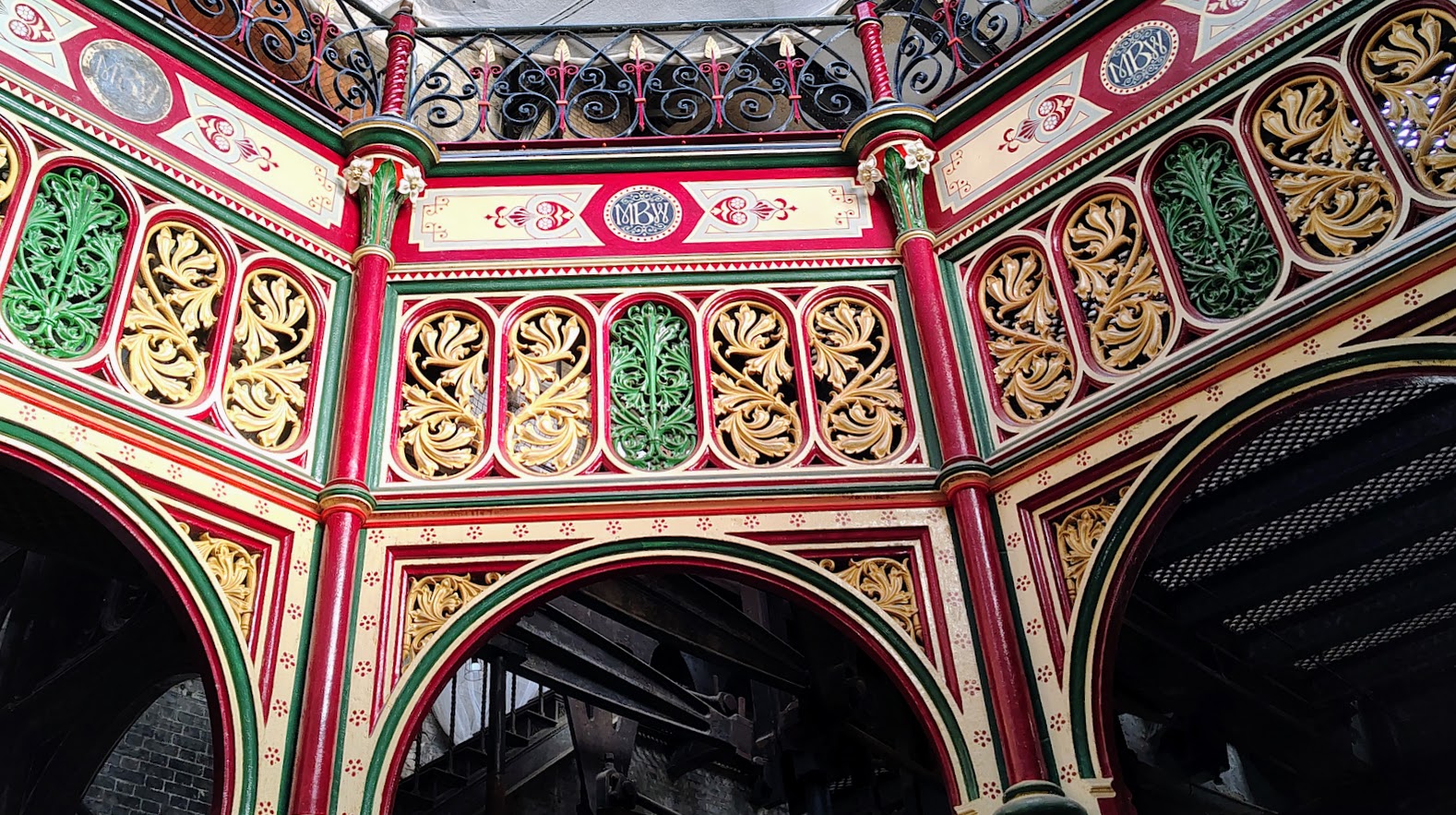
It was only as I delved into the murky world of the projectors that Bazalgette came into contrasting view. In all honesty, I hadn’t heard about his work and I hadn’t set out to study him. I discovered that he was consciously and symbolically challenging the projectors when seeking funding for the programme of London sanitation projects. His innovativeness, defiance of previous norms and social consciousness caught my imagination.
Keller (1966) offered a very balanced historical overview of the projectors. Whilst, he didn’t focus upon the London sanitation projects, he probably would have seen the projectors as a necessary precursor to Bazalgette’s public works. In essence, the projectors encouraged local authorities, governments and societies to dare to dream about expensive progressive visions of the future. We take notions of progress for granted today, but this wasn’t always the case. Keller (1966) regarded projectors and their projects as characterising a phase in history up to about 1660. However, the terminology of projectors was still in use throughout the 18th and 19th Centuries and projectors were still operating at the time of the London sanitation projects (see examples in the next section).
Accounts of projectors cross traditional academic discipline boundaries with references to projectors evident within technology, innovation, engineering, entrepreneurship, political and literary histories. Johnathan Swift explicitly referred to projectors in Gulliver’s Travels. This famous novel was originally published anonymously due to its critique of prominent figures and institutions within society and politics. Swift depicted the projectors as luring the gullible into fantastic engineering schemes, yet when these works failed, the projectors departed in search of new people to trick into such schemes. More subtly, it has been suggested that Swift was critiquing certain members of England’s Royal Society and the scientists and scholars engaged in experimentation intended to yield practical applications. Keller (1966) favoured a more balanced perspective, but did acknowledge that projectors had a bad name in terms of deceiving themselves and others and dazzling their victims with technical terms.
Bazalgette vs The Projectors
The challenge for Bazalgette and the MBW was to differentiate their reputable project activities from the more speculative activities of projectors.
What examples of projectors were evident at this time?
- The partnership of Napier and Hope and Thomas Ellis aimed to profit from the conversion of raw sewage from the outfalls although both ventures failed as a consequence of the collapse of the capital investment markets in 1866.
- The Great London Drainage Company promoted by John Morewood proposed making a profit from metropolitan sewage by applying it to agriculture.
- MBW had to undermine the credibility of another projector Wicksteed’s London Sewage Company.
- Railway projectors such as the Thames Railway Company wanted to develop railways into the centre of London along the banks of the Thames.
These examples may be regarded by some as entrepreneurs simply seeking to compete for public funds. However, my reading of Bazalgette and MBW activities was that they were concerned that such projects had the potential to undermine the public perception of the London sanitation projects and the utility of the significant public funding required.
How did Bazalgette seek to differentiate the London sanitation projects from the activities of the projectors?
The London sanitation projects can be differentiated from the projects of the projectors in terms of innovations which would be regarded as project management best practices a century later. Innovations evident included; transparency, contracting, leadership and governance and process-based knowledge.
- Transparency – The process of undertaking major projects became far more transparent. Government commissions preceded the London sanitation projects reflecting a desire to understand the nature of health problems affecting London with a view to finding effective solutions. Closer scrutiny of the funding of major projects became increasingly evident.
- Contracting – Large-scale contracting was informed by learning from the construction of barracks during the Napoleonic wars. Competitive tendering for large projects replaced earlier arrangements whereby clients made arrangements with each master craftsman. Contractors increasingly engaged in competitive tendering processes and as part of this process agreed to penalty clauses being written into contracts.
- Leadership and Governance – Bazalgette and the MBW proactively challenged the activities of the projectors. They worked closely with a range of key stakeholders including the government, the engineering profession, the contractors and the media in order to gain societal approval for their projects.
- Process-based knowledge – Project-based processes were beginning to be undertaken during this era, differentiating these projects from the earlier more opportunistic projects of the projectors.
The London sanitation projects were perceived at the time as being successful and with the benefit of hindsight they still appear successful. The projects acted as an exemplar of what could be achieved. They gave impetus to local government in London and other local authorities beyond. Bazalgette and the MBW through the London sanitation projects effectively addressed the number one cause of death in London at that time. Whilst not always elegant they appear to have succeeded in both encouraging and meeting growing project expectations of government and society. Histories of project management typically begin in the 1950s, but many of the field’s subsequent best practices were evident on the London sanitation projects.
Visiting Crossness Pumping Station
On the 4th November 2025, I had the pleasure of visiting the Crossness Pumping Station in order to engage tangibly with the historic management of sewage in London.


It was a pleasant surprise to undertake the final part of my journey on the Royal Arsenal Narrow Gauge railway, pulled along by the suitably named Bazalgette engine (see above). We found ourselves next to the current Thames Water treatment works. Smells in this instance added to rather than distracted from the visitor experience.
Volunteers on the railway and at the pumping station had a passion and enthusiasm for their “work” and there was a wonderful sense of community. We started with a very informative talk on the background history. We were then taken on a fascinating guided tour by Arnie, who had effectively transitioned from plumber to charismatic tour guide.
Previously, I had seen images inside the pumping station, but still the irony of beauty contained within the pumping station made a big impression. I want to focus on three insights relevant to the projectors which I gained from my visit and the informative narrations, although there was so much more to the tour.
1. High up on the outside of the pumping station a carving of Bazalgette’s head was pointed out to us. Today, in an age of self-promotion and celebrity this might be viewed as ego. However, I choose to regard it as Bazalgette taking ownership/responsibility for the project. In contrast to projectors promising the world, failing to deliver and then disappearing, symbolically Bazalgette is still visible in 2025.

2. Inside the pumping station we focus on the decorative iron working beautifully painted in rich colours. It seems excessive and out of context in a sewage pumping station, but this contradiction just adds to the beauty of the spectacle. Our guide explained how Bazalgette needed to make tangible this project, which had benefitted from large amounts of public money, at a time when such spending on infrastructure was a relatively new undertaking. We were asked to look very closely at the decorative work and we realise that we are looking at figs and senna pods (see image above). A sanitation joke hidden in plain sight. Again, in contrast to the projectors who invariably cut financial corners, excessive decorative work symbolises the antithesis of cutting corners.
3. We visited the building where the opening ceremony banquet was held. I’d seen the pictures before, but the idea of a banquet in a sewage pumping station is still hard to grasp. It is explained in terms of messaging to civic dignitaries and funding bodies what their funding had enabled. Again, we encounter a contrast with the projectors of that era. You could imagine projectors hosting a banquet when seeking funding, rather than after the project was completed.
The Projectors – Past, Present and Future
Past – In this post, I have summarised my peer reviewed paper, The Victorian London sanitation projects and the sanitation of projects. This paper was published in 2013 in the International Journal of Project Management. I am afraid academic papers tend to be firewalled by the publishers, but if you have journal access, the paper title above leads to the journal log in page.
If you are interested in learning more about the projectors, Steve Reeve and myself had the pleasure of supervising the doctorate of Kristina Zekonyte. Her focus shifted from my fascination with Bazalgette and the London sanitation projects towards contributing to a deeper historical understanding of the projectors. Clicking on her title below should take you to the successfully completed doctoral thesis, which thankfully is not firewalled.
Projectors in seventeenth century England and their relevance to the field of project management
Present – Today, forgotten projectors are rarely acknowledged in historical accounts of Bazalgette’s considerable contribution to the effective sanitation of London. More generally, the existence and prevalence of projectors is rarely acknowledged in theories and practices of project management. Today, embracing the latest artificial intelligence searching for the history of the projectors, you are likely to be taken down a history of visual aids rabbit hole.
Future – As I wandered around the Crossness Pumping Station, I was amongst visitors and volunteers of a similar age to myself. History is very appealing and relevant when you have more past than future. However, amongst all the brave new world talk of artificial intelligence and other innovations, forgetting the past can and should be questioned.
“Those who cannot remember the past are condemned to repeat it.” (George Santayana, 1905)
I suspect Bazalgette would be saddened to witness how a large industrial project such as HS2 is being managed by the brightest minds in business and government today. Grand schemes failing to deliver what societies have financed is nothing new. For myself the projectors whom Bazalgette tangibly differentiated himself from still exist, if only you look beyond the very expensive suits and top of the range smart phones.
 Woodlanddecay